The energy industry doesn’t lack innovation, expertise or ambition. But turning all of that into a clear, compelling story is another challenge entirely.
It’s something we see every day working with B2B companies across energy, maritime and technology. Businesses developing sophisticated solutions, solving complex problems and pushing their industries forward, yet sometimes struggling to communicate what makes them different and why it matters.
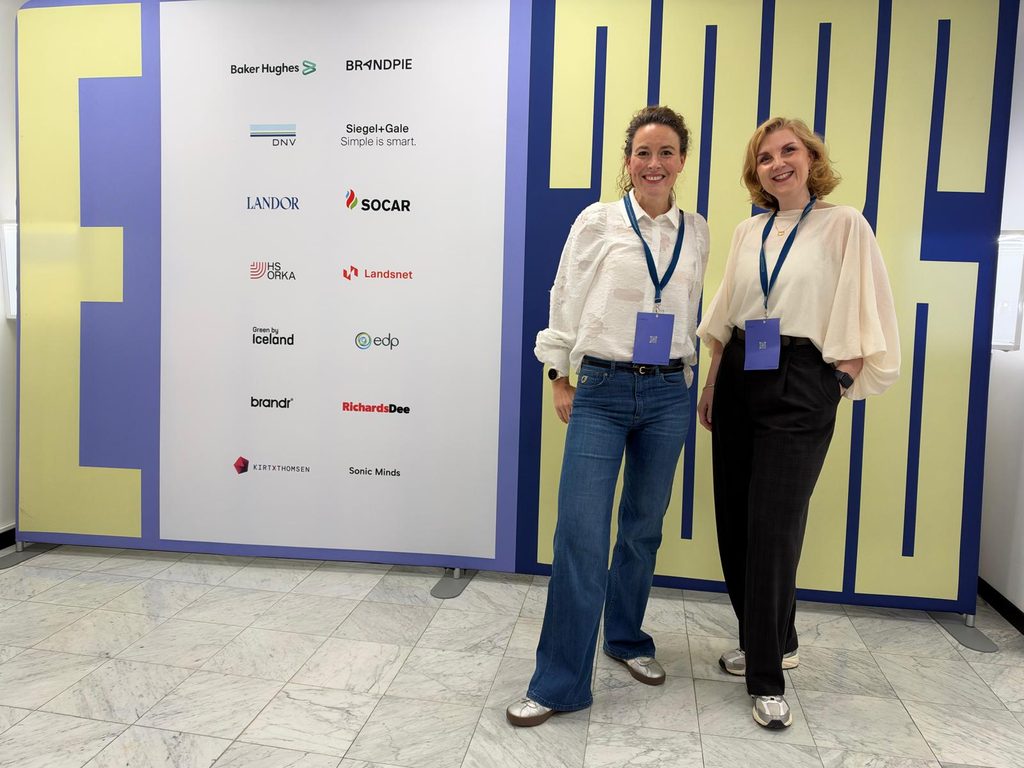
At CHARGE – Powering Energy Brands Conference in Florence, we discovered just how widely that challenge is shared.
Over two days, Laura and Valentina joined marketing and communications professionals from international energy companies, alongside leading branding agencies including Brandpie and Landor, to explore how brands can build trust, demonstrate business value and remain relevant in an increasingly complex world.
Different organisations, different perspectives and different resources. But many of the same challenges. We returned to Stavanger with fresh ideas, a few challenged assumptions and a stronger conviction about something we already believe at Project Neon:
Great branding isn’t about making more noise. It’s about finding smarter ways to make a bigger impact.
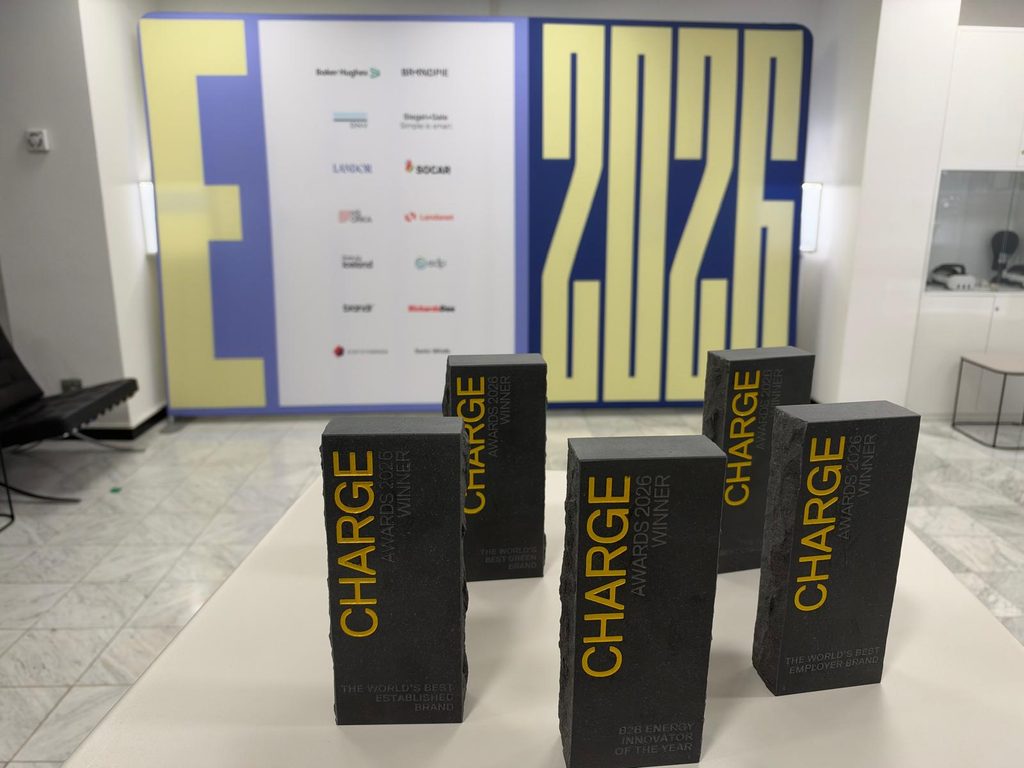
Brand is a business tool, not just a marketing exercise
One of the strongest themes throughout CHARGE was the evolving role of brand in business strategy.
Hearing perspectives from agencies and professionals from relevant companies in the industry, made an important point: branding goes far beyond visual identity, visibility or recognition. It’s about creating commercial value, influencing perceptions, strengthening relationships and helping organisations navigate change. For marketing and communications professionals working in-house, this also means making a stronger case for brand investment and demonstrating how it contributes to business objectives.
For us at Project Neon, this really resonated.
Working closely with B2B companies across energy, maritime and technology, we see extraordinary expertise every day. Businesses developing innovative solutions, improving the performance of critical infrastructure and solving highly specialised problems. But having something valuable to offer and making customers understand why it matters are two very different things. A technology can be groundbreaking without its value being immediately obvious. A company can have decades of expertise and still struggle to communicate what makes it different. That’s where strategic branding and communication make a difference. Not by making a business sound more impressive than it is, but by making its genuine value clearer, more relevant and easier for customers to recognise.
And importantly, by connecting that value to business outcomes.
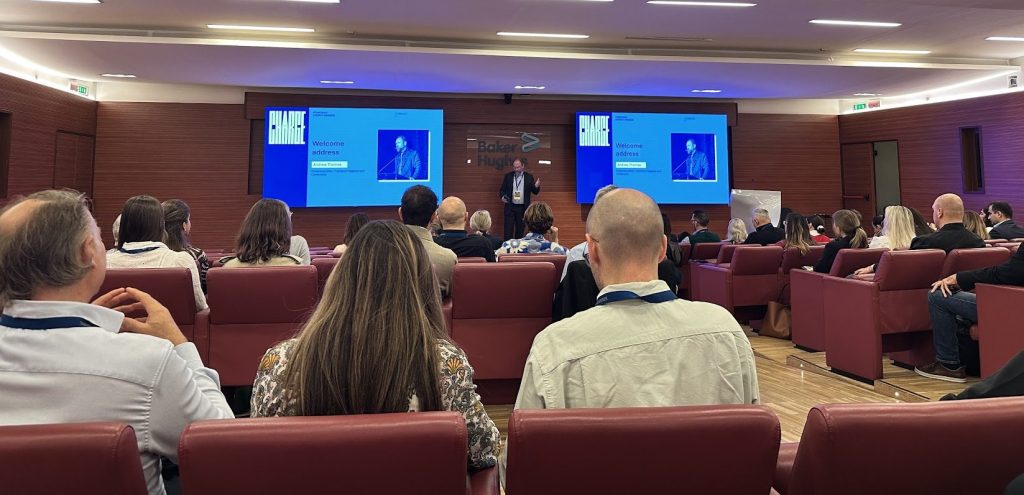
Simplicity is harder than it looks. And more valuable than ever.
If there’s one challenge that connects many of the companies we work with, it’s complexity.
Complex technologies. Complex markets. Long sales cycles. Multiple stakeholders. Highly specialised audiences. The energy industry certainly doesn’t lack expertise. But expertise alone doesn’t guarantee understanding. Simplicity was a recurring theme in Florence, particularly when discussing how brands can remain distinctive and relevant in an increasingly crowded information landscape. And simplicity isn’t about removing technical substance.
It’s about understanding what matters to the audience and knowing how to communicate it.
An engineer evaluating a solution might need detailed technical specifications. A procurement team wants confidence in delivery and reliability. A business leader may be more interested in the commercial impact. The technology remains the same. The story needs to connect with different priorities.
For us, this is at the heart of much of what we do.
We spend time understanding complex products, services and technologies, working with the people who know them best, and translating that knowledge into messages that make sense to the people who need to act on them. Sometimes, the most valuable contribution isn’t adding something new. It’s helping a business recognise what really matters in what it already does.
Because clarity isn’t about saying less. It’s about making what you say count.
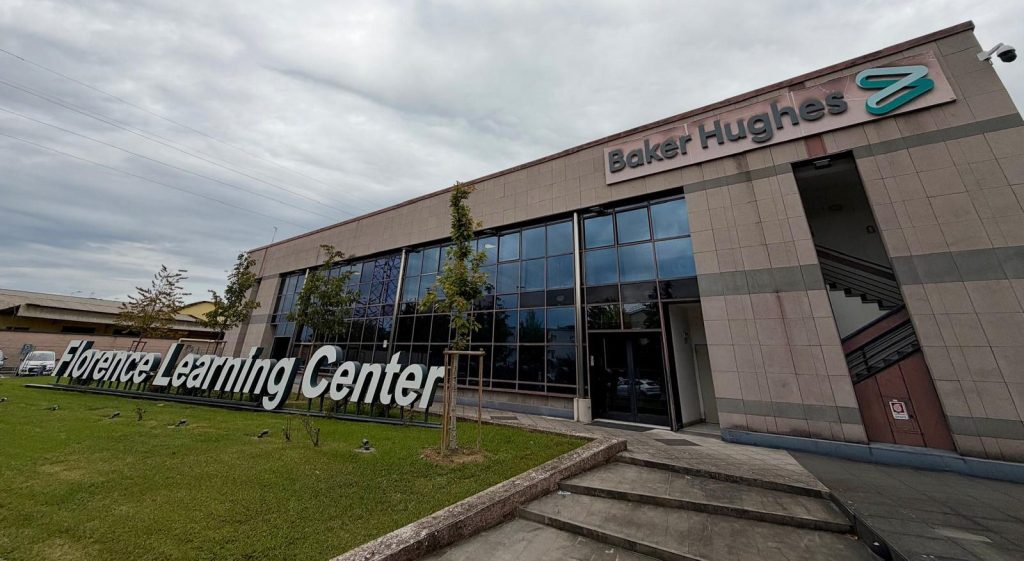
AI is changing the tools. Creativity still needs a point of view.
Unsurprisingly, artificial intelligence was a major topic at CHARGE.
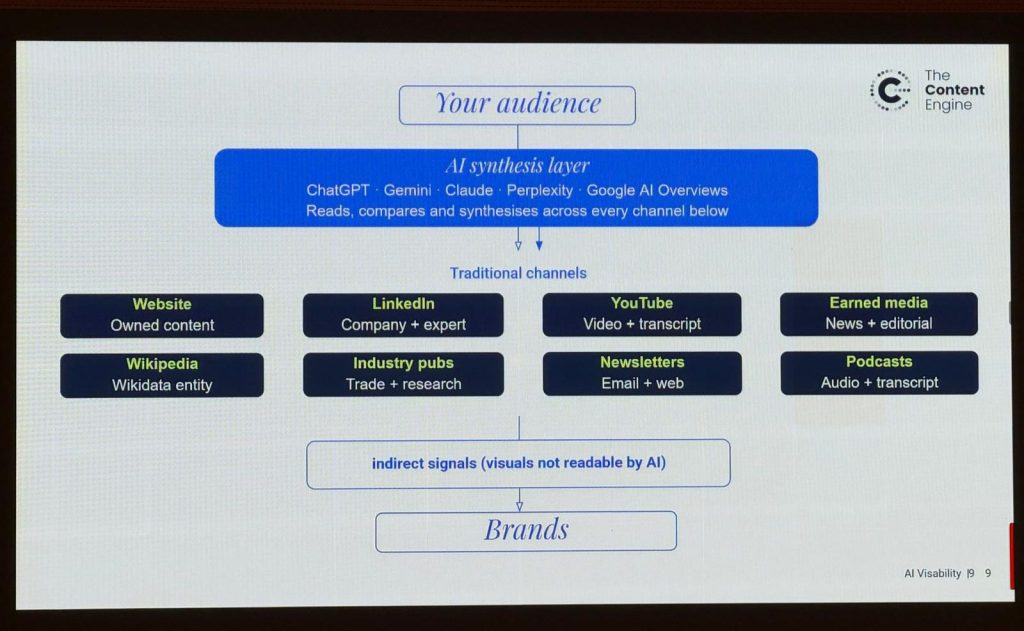
But the discussions went beyond using AI to produce content faster or automate everyday marketing tasks. They explored how AI is changing the way brands are discovered, how communications teams operate and, perhaps most interestingly, what it means for creativity and differentiation. When everyone has access to similar tools, the risk is that everyone starts producing similar content. And in an industry where words like innovation, sustainability, expertise and partnership already appear everywhere, standing out can become even harder.
This raises an interesting challenge for marketers.
If producing content is becoming easier, perhaps deciding what deserves to be communicated becomes even more important. For B2B companies, the most interesting stories are often found in the details: an unexpected technical challenge, a different approach to solving a problem, a lesson learned during a project or an informed perspective on where the industry is heading. Those stories don’t emerge from a generic prompt. They come from understanding the business, asking good questions and spending time with the people behind the expertise.
AI can certainly help us explore ideas, improve processes and work more efficiently. But creativity still needs curiosity, judgement and a genuine point of view.
Technology can accelerate the process. It shouldn’t replace the thinking that makes the result worthwhile.
Trust is built through experience, not just communication
Trust was another recurring theme throughout the conference, and understandably so.
Energy companies operate in an environment where decisions can involve significant investments, long-term commitments, complex risks and multiple stakeholders. Customers, employees, investors and communities all need reasons to believe what a company tells them. Communications can help establish those expectations. But the business needs to deliver on them.
A company that promises responsiveness needs to demonstrate it in customer interactions. A business that positions itself around innovation needs to show how that innovation works in practice. This is where brand becomes much more than a marketing responsibility. It connects to sales, operations, leadership, culture and the everyday experiences people have with a business.
For B2B companies, that consistency is particularly important.
A strong proposition becomes more credible when customers encounter the same message on the website, hear it in a sales conversation, see it supported by a case study and experience it during delivery. And often, the evidence is already there. In successful projects, customer relationships, employee expertise and the way a company approaches challenges. The opportunity is to recognise that evidence and communicate it more effectively.
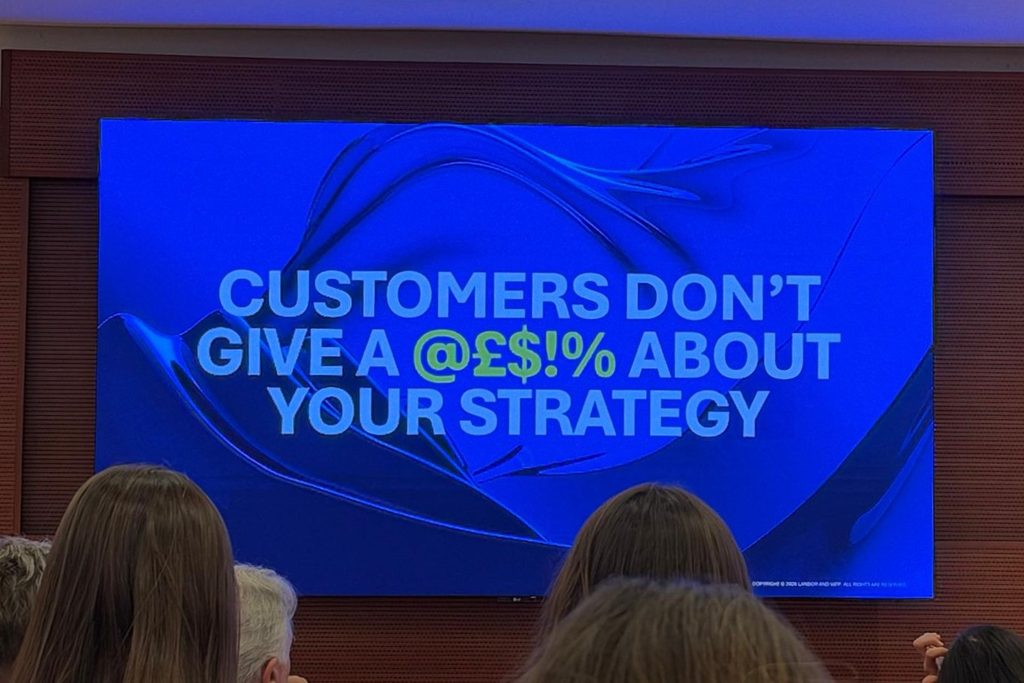
A strong brand doesn’t just tell people what to expect. It gives them reasons to believe it.
Agility matters. But so does knowing what shouldn’t change.
The conference theme, Building the agile energy brand in a disrupted world, reflected the challenges facing an industry navigating technological, commercial and geopolitical uncertainty. But one of the more thought-provoking ideas emerging from the discussions was whether agility alone is enough.
Of course, businesses need to adapt.
Markets evolve, technologies develop, customer expectations change and new opportunities emerge.But constantly reacting without a clear sense of identity can leave a brand struggling to stand for anything distinctive.This raises an important question: what should evolve, and what should remain consistent?
Our takeaway is that strong brands need both a clear foundation and the flexibility to respond to change. For growing B2B companies, this is especially relevant. New products, partnerships, acquisitions or expansion into different markets can quickly change how a business operates and how it needs to communicate. A clear positioning provides a common reference point, helping teams make decisions and communicate consistently even as the business evolves.
The challenge isn’t simply keeping communications up to date. It’s making sure the brand continues to tell a coherent story as the company grows.
Bringing the conversation back to Stavanger
We didn’t return from Florence with a completely new definition of branding. If anything, CHARGE reinforced some of the principles that already guide our work at Project Neon.
As a boutique agency, we value being close to our clients, understanding their businesses and connecting strategic thinking with practical delivery. Exchanging perspectives with global agencies and in-house marketing professionals was a reminder that, while our resources and approaches may differ, many of the challenges we face are remarkably similar.
It was also a pleasure to share the experience with Amy, Ingvild and Ane from IK Group and Izomax, and to meet so many passionate people from across the energy industry.
The scale may be different. The ambition doesn’t have to be.
We came home with fresh ideas, new connections and a renewed conviction that clarity, creativity and trust are essential to building brands that make a real difference.
And Florence certainly provided a beautiful setting for all that inspiration. Although Valentina losing her voice for an entire day did add an unexpected challenge to a conference dedicated to communication.
Apparently, even marketers occasionally need to let their hands do the talking.