Connect
Connect
Connect
Connect

SEO in 2026: why ranking on Google is no longer enough

For almost two decades, SEO followed a relatively simple logic:

Rank higher. Get clicks. Generate traffic.

That model is now changing faster than most companies realize. In 2026, users increasingly interact with AI-generated answers before they ever reach a website. They ask ChatGPT for recommendations. They read Google AI Overviews instead of scrolling through ten blue links. They compare suppliers through Perplexity summaries. They rely on conversational interfaces to filter information for them.

Search is becoming an answer layer. And that changes what visibility means. Today, a company can influence a buying decision without generating a single click. That’s why the conversation around SEO has expanded into something new: AEO, Answer Engine Optimization.

While this may seem like an extension of buzzwords, the key point is: this is not the death of SEO – it’s the evolution of visibility. The brands that will win in the next few years are not the ones chasing algorithms. They are the ones becoming trusted sources inside AI-generated conversations

From Search Engines to Answer Engines

Traditional search worked like a directory. Users searched. Google displayed pages. Users clicked.

AI-powered search behaves differently. Today, platforms increasingly blend information instead of simply listing it. The user experience now looks more like this:

Question → AI selects sources to inform the response AI-generated answer → user given source references

This shift is already visible across platforms such as Google AI Overviews, ChatGPT browsing experiences, Perplexity AI, Microsoft Copilot and voice assistants. In many cases, users receive enough information directly in the interface that they don’t need to visit any websites. That phenomenon is often referred to as “zero-click search.”

But zero-click does not mean zero influence. It simply means visibility happens earlier.

People searching on Google

What Is AEO, really?

Answer Engine Optimization (AEO) is the practice of optimizing content so AI systems can:

  • understand it
  • extract it
  • trust it
  • summarize it
  • cite it
  • recommend it

Traditional SEO focused on ranking pages. AEO focuses on becoming part of the answer itself. That distinction matters. Because AI systems do not evaluate content exactly like search engines did.

They prioritize:

  • clarity
  • semantic relevance
  • structure
  • topical authority
  • consistency across sources
  • trustworthiness

In other words:

The internet is shifting from a “ranking economy” to a “reference economy.” In many ways, this mirrors what happened with LinkedIn’s Brew 360 update. Content visibility is becoming less dependent on isolated keywords and more dependent on semantic relevance, topical consistency, and perceived authority within a subject area.
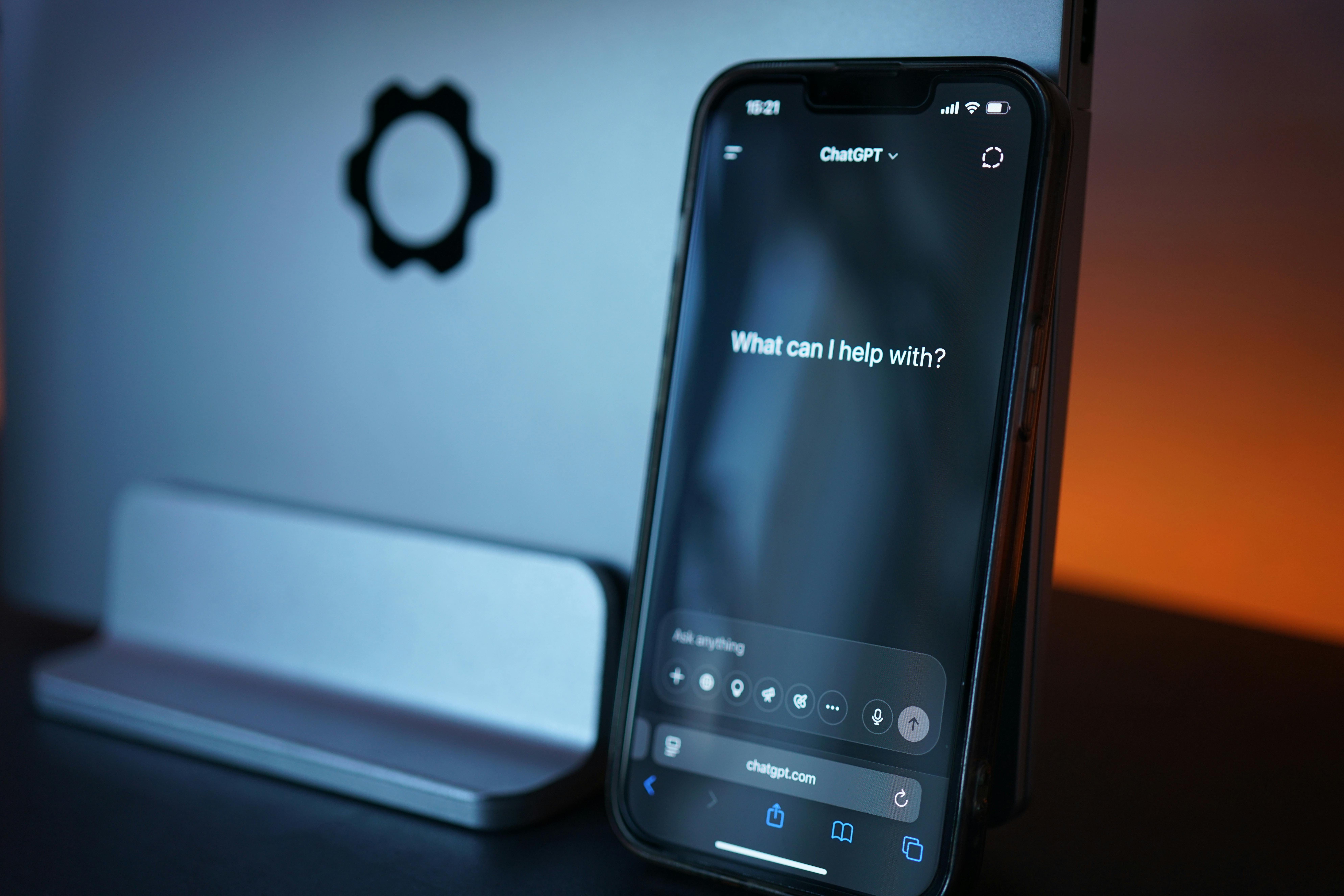
Chat GPT dashboard

Why visibility and search behaviour are changing in B2B

For years, traffic was the default way to measure SEO success. More clicks meant more visibility. In 2026, that relationship is becoming far less direct, especially in B2B.

Decision-makers increasingly use AI systems during supplier research, market comparisons, strategic planning, and technical evaluations. Instead of searching isolated keywords, they ask conversational questions and rely on AI-generated summaries to filter information before exploring further.

That means a company may influence a buying decision long before a website visit ever happens.

A user might discover your framework inside an AI summary, reference your explanation internally, or shortlist your solution based on how your expertise was surfaced across search and answer engines, even without appearing in traditional analytics.

This is why traffic alone is no longer the core metric to measure visibility.

A successful outcome has transitioned from:
“Did they click?”

To:
“Did we shape the conversation before the click happened?”

Because in modern search, influence increasingly starts earlier in the decision journey and often outside the website itself.

The new reality: SEO and AEO are not opposites

One of the biggest misconceptions right now is that AEO replaces SEO. It doesn’t. Strong AEO still depends on strong SEO foundations.

Without:

  • crawlable content
  • technical health
  • topical authority
  • internal linking
  • site structure
  • credible brand signals

AI systems have nothing reliable to reference. SEO remains the infrastructure. AEO becomes the visibility layer built on top of it. The companies performing best today are the ones who are combining both.

At Project Neon, we believe core content principles still apply. But they have now taken on extended meanings in this context:

1. Visibility: Your content is discoverable in traditional search (ranking).

2. Credibility: Your ideas surface inside AI summaries, snippets, and assistant responses.

3.Authority: Your explanation becomes the version people remember and repeat.

Traditional SEO focused heavily on the first layer. The best strategy for companies today, is to try and own all three.

Why original thinking matters more than ever now

One of the most important shifts in 2026 is this: generic content is becoming invisible. AI systems are already saturated with recycled articles saying the same thing. If everyone publishes identical “Top 10 SEO Tips” content, AI has no reason to prioritize one source over another.

Original thinking is becoming the real differentiator. As AI-generated content floods the internet with repetitive information, visibility increasingly shifts toward sources offering genuine perspective, through unique frameworks, expert insights, first-hand experience, and real-world case studies.

In practice, this means companies need fewer low-value articles and more high-quality knowledge assets.
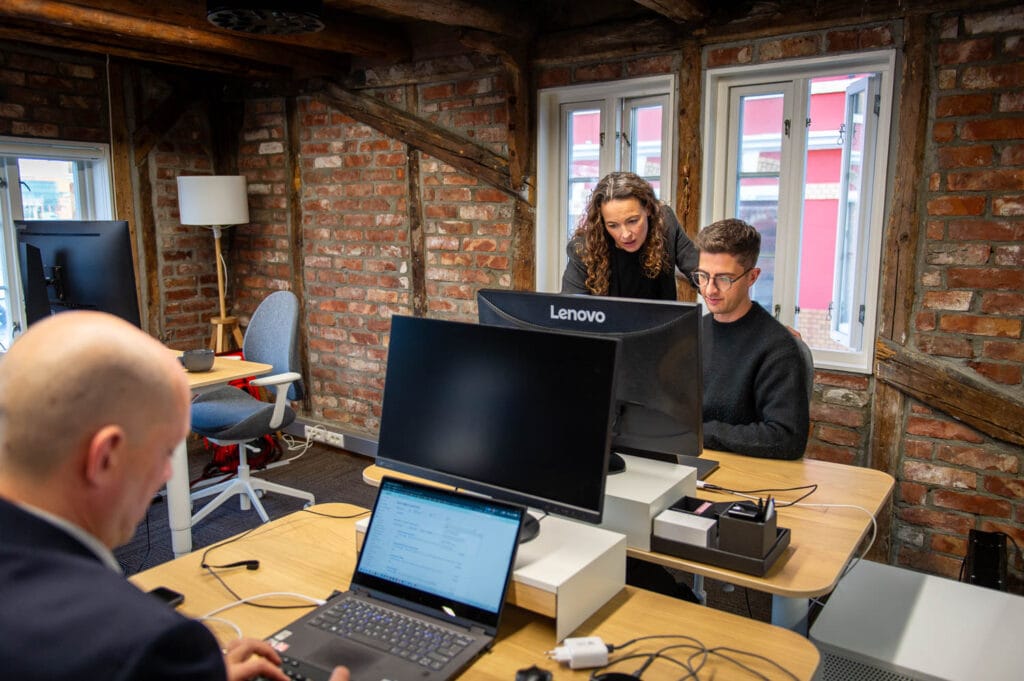
people digital strategy meeting at Project Neon office

How SEO strategy needs to change in 2026

The biggest shift happening in SEO is not only technical, it’s behavioural. Users are no longer searching only through keywords. They are asking more complex, conversational questions and increasingly relying on AI systems to filter, summarize, and interpret information for them. That means modern optimization is becoming less about matching exact search terms and more about understanding intent, context, and decision stages.

The best-performing content today is the content that genuinely helps users understand something, not just find something.

At the same time, AI-powered search systems are changing how content gets evaluated. Structure, clarity, and topical depth matter more than ever. Content that is easy to interpret, summarize, and reference is significantly more likely to surface across AI-generated responses.

This is also why isolated blog posts are becoming less effective. Search engines and answer engines increasingly reward brands that demonstrate consistent expertise across an entire topic ecosystem. Authority is now cumulative: depth, consistency, and connected knowledge matter more than publishing volume alone.

And perhaps most importantly, the rise of AI generated content is making generic content increasingly invisible and low in value. Today, a unique perspective and memorable thinking becomes one of the strongest visibility advantages a brand can have.

What you can stop worrying about

One thing worth clarifying: not everything being discussed online about AEO is actually necessary.

In a guide published on 15 May 2026, Google Search Central was explicit on this. You don’t need to create llms.txt files or special AI markup. You don’t need to “chunk” your content into fragments for AI to process it better. And you don’t need to rewrite your content specifically for AI systems, they’re built to understand context and meaning, not just exact keywords.

The fundamentals haven’t changed. What has changed is the bar for quality. You can read Google’s full guidance here.

Visibility is becoming harder to measure and to understand

One of the biggest challenges with AI-driven search is that visibility increasingly happens outside traditional analytics.

A company may influence a buying decision long before a user ever visits the website. As AI systems become more involved in research and comparison processes, the customer journey becomes less linear and far less measurable through traffic alone.

That is why traditional SEO reporting is no longer enough on its own.

Modern visibility strategies need to look beyond clicks and begin considering broader signals of influence: branded search growth, topic ownership, presence across AI-generated answers, assisted conversions, and overall authority within a category. Because the real impact of AEO goes beyond technology, it reflects a broader shift in how people discover and evaluate information.

That’s why people are increasingly outsourcing research, filtering, and interpretation to AI systems. Search engines used to help users find information. Answer engines increasingly help users understand it. As a result, brands are no longer competing only for attention. They are competing for trust. And trust is built through clarity, consistency, expertise, and original thinking.

Final thoughts: SEO is not disappearing. But its role is evolving.

Ultimately in 2026, visibility is no longer just about ranking first on Google. It is about becoming part of the answers shaping decisions across AI-driven platforms. The companies that adapt fastest will not necessarily be the ones producing the most content, but the ones creating the most useful, structured, trustworthy, and referenceable knowledge.

Because in the era of AI-generated search, the goal is no longer simply to be found. It is to become the source others rely on to understand the topic in the first place.

LinkedIn Algorithm 2026: how Brew 360 is redefining what works (and what doesn’t)

In 2026, LinkedIn’s content ecosystem looks very different. The old “algorithm” that once rewarded posting frequency, timing hacks, and superficial engagement has been replaced by something much smarter, an AI-powered recommendation and visibility system called Brew 360. This shift isn’t a minor tweak. It rewires how content gets seen, who it reaches, and what actions truly drive influence on the platform.

In this article, we unpack what Brew 360 actually is, why many old tactics no longer work, and how professionals and companies should adapt their LinkedIn strategy in 2026, with practical steps backed by expert insights.

What Is LinkedIn Brew 360? 

LinkedIn’s Brew 360 isn’t just another algorithm update, it’s a comprehensive AI-driven content visibility system that interprets the meaning behind what people post, who they are, and who might genuinely care about their content. Unlike the legacy model, which mostly counted likes, comments and basic engagement signals, Brew 360 understands context, language, and professional relevance.

Under this system:

  • Content is evaluated for semantic relevance, not surface-level metrics
  • The system learns from your historical activity and expertise signals
  • Visibility is personalized, not everyone gets the same treatment
  • Engagement quality (e.g., saves and thoughtful comments) matters more than quantity of reactions

In short, Brew 360 reads like a human editor, prioritizing clarity, relevance, and real value over tricks and shortcuts.

brew 360 waht's new

Why traditional LinkedIn tactics no longer work 

Many professionals have noticed that impressions and reach are down, even for high-quality content. But this isn’t because LinkedIn is broken. It’s intentional. Brew 360 shows fewer posts to smaller but more targeted audiences, rewarding content that genuinely serves the right people.

Here’s what has changed:

  1. Engagement and hacks are dead. Games like tagging long lists of people, posting at “magic” times, chasing likes, or using engagement pods are now actively detected and deprioritized. Brew 360 reduces visibility for content that feels forced or off-topic
  2. Frequency doesn’t mean visiblity. Posting constantly no longer increases reach. Instead, the system favors focused consistency over sporadic bursts of volume. Quality is now the central signal.
  3. Hashtags no longer influence content distribution. LinkedIn now identifies recurring themes across your posts to understand what you consistently talk about and who should see your content. Profiles and companies that focus on two or three defined areas of expertise achieve more stable and highly targeted visibility.
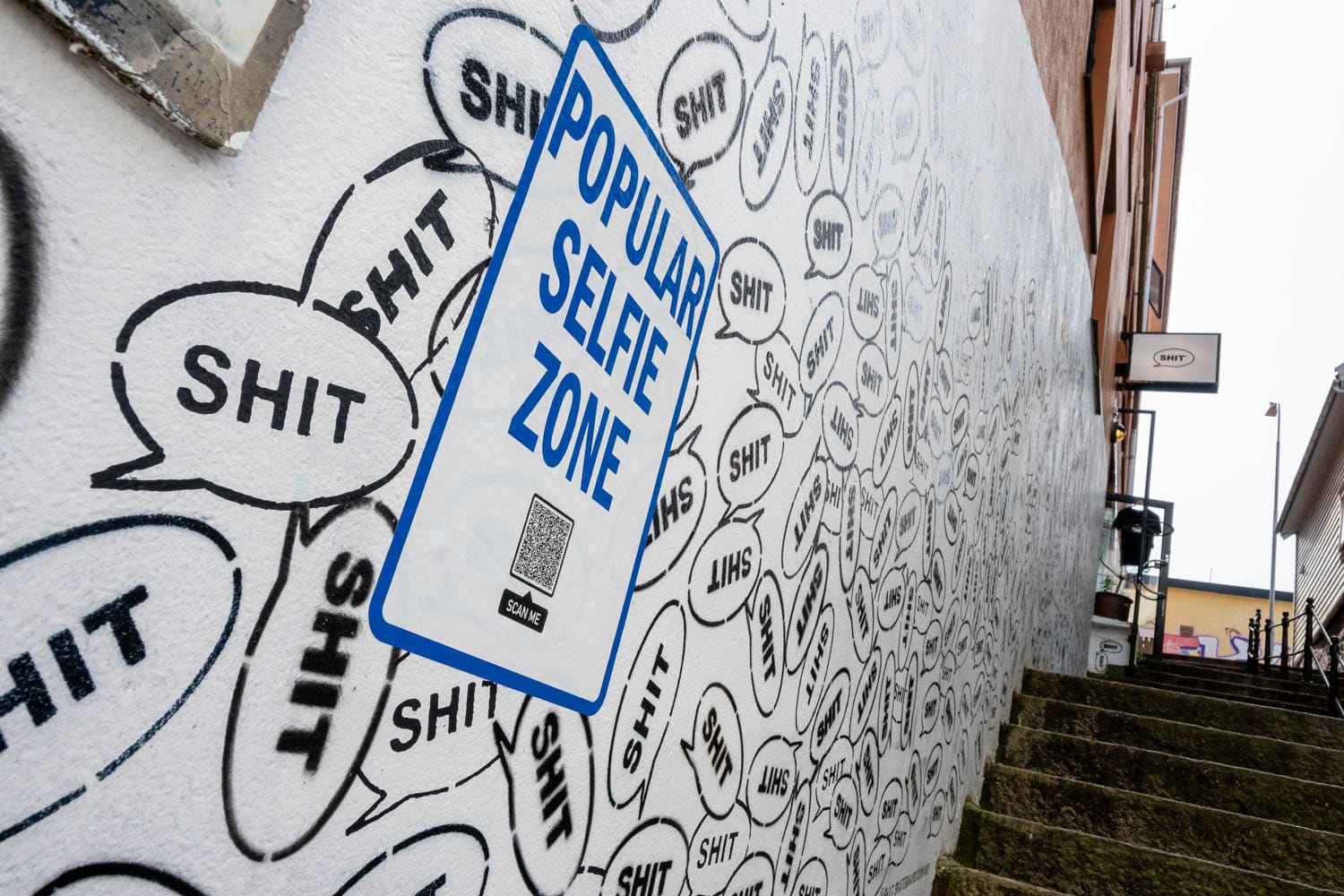
Stavanger Project Neon Øvre Holmegate

How Brew 360 actually works (behind the scenes)

According to LinkedIn experts and real user experience. reads more than your post. It examines:

  • Your profile information (headline, About, experience)
  • Historical posting patterns
  • What you engage with
  • Comment quality and conversation depth
  • Which audiences find your content valuable
  • Consistency shapes credibility

Posting tightly around 2–3 core topics helps Brew 360 understand your niche. This thematic consistency leads to more stable and relevant reach.

  •  AI-generated or templated writing is penalized

Because the system detects patterns, generic or template-style content gets less visibility. Authentic, human language wins.

  • Saves and thoughtful engagement are high-value signals

When people save a post or engage with a meaningful comment, LinkedIn interprets that as long-term value. These signals significantly boost visibility and longevity in the feed

What this means for individuals

Under Brew 360, your LinkedIn strategy should shift from gaming visibility to building credibility and value. To succeed:

  • Engage in your niche consistently: likes and replies in your field signal relevance. 
  • Align your content with your professional identity: make sure your headline, About section, and posts tell a cohesive story.
  • Focus on fewer, higher-impact posts:1–2 thoughtful posts per week beat daily shallow broadcasting.
  • Write clearly and teach something useful: explanations, frameworks, and lessons outperform generic observations.
  • Encourage thoughtful discussion: questions and reflections that spark real comments matter more than surface reactions.

What this means for companies 

Company pages are especially impacted. Organic reach has declined because Brew 360 now prioritizes relevance at scale over broad visibility. To adapt:

  • Define your focus clearly: your company description and tagline are now key signals.
  • Create audience-specific posts: avoid generic updates for everyone; target content by sector or role.
  • Use visuals to clarify, not bait: charts and carousels perform best when they illuminate insights.
  • Leverage employee advocacy: early, thoughtful comments from internal experts amplify reach and credibility.
  • Invest in a proper Paid Advertising strategy to pair with organic publications
  • Organic visibility can still work, but it works differently: through relevance, precision, and coordinated engagement.

Seven strategic shifts you can apply now

Here’s a concise action plan based on expert insights from LinkedIn strategists:

  1. Refine your professional narrative: make your expertise crystal clear in your profile and posts.
  2. Pick 2–3 core topics and post consistently around them.
  3. Write for clarity, not cleverness: avoid AI templates and buzzwords.
  4. Encourage real discussions: questions that require thought signal value to the algorithm.
  5. Focus on saves and long-term utility: craft posts people will want to bookmark.
  6. Coordinate employee engagement thought-leading comments matter more than generic replies.
  7. Pair organic content with LinkedIn Advertising for scale and frequency control

For professionals and brands who adapt early, Brew 360 offers a significant competitive advantage. For those relying on outdated tactics, visibility will continue to fall.

Want help mastering this new landscape? Stay tuned for our Project Neon guides on advanced LinkedIn strategy or contact us for a tailored audit.

AI can write content, but here’s why the human touch still matters

It’s a Monday morning in mid-September. First thing in the week, I want nothing more than a cup of coffee, a quick scroll through my emails, maybe a glance at the news or LinkedIn updates. But lately, I’ve noticed something strange: my feed feels… flat. 

It’s the same overly enthusiastic, “guru” tone everywhere, peppered with emojis, every word capitalized like it’s shouting at me. Honestly, it’s uninspiring. Social media is spammed by ChatGPT and Copilot worded posts. We keep posting content pretending it’s authentic, when the opposite is the case. Everyone is basically just pretending. 

Let’s be honest: this stuff might fool some people, but a “geriatric millennial” like me? Not so much. I was there when the digital world started opening up and remember when people poured hours into writing genuine blog posts, keeping them alive with consistency and passion. I witnessed the rise of social media. I’ve worked in companies that invested real time, money, and creativity into building a unique voice across websites, campaigns, and channels. 

But today, everything feels different. AI tools haven’t just arrived to help us: they’ve replaced authentic human voices. And somewhere along the way, we stopped using our own creativity. We got lazy. We convinced ourselves that being good at prompts makes us experts in communication and personal branding. But here’s the question that keeps bugging me: where did creativity go? Where did authenticity go? Is it that our perspective and perception also changed?  

Are we still able to discern what is “INSTRAGRAM” vs “REALITY”? Are we still able to see the world without filters? 

Just a few philosophic questions to start the week! 

Jokes aside and spoiler alert: I think that human voices still matter. 

The power of authentic content in 2025 

In a world flooded with content, what truly stands out isn’t just clever headlines or SEO tricks: it’s authenticity. People want to hear and read stories that inspire, educate, and actually add value to their lives. Something they can relate to. Authenticity isn’t optional, it’s everything. 

Sure, AI platforms like ChatGPT, Gemini, CoPilot or Jasper can generate text quickly, based on data and patterns. But they still lack the human spark: the imperfect, emotional, real element that makes content engaging and relatable. 

If you’re wondering why your unedited, low-res casual photos of the team get more engagement than a perfectly polished, on-brand carousel, well, you already have your answer. 

It’s a changing landscape. 

This is just the state of things right now. When I started writing this blog some months ago, it looked very different. I’ve had to update it again and again, because AI is evolving at lightning speed. Tools that seemed impossible twelve months ago are now part of our everyday workflow. 

And yet, one thing hasn’t changed: AI still can’t replace human creativity or the personal touch. Yes, it gets (terrifyingly) sharper every day: it learns from our feedback, our experiences, our corrections. But it’s still not there

Ipnocrazia

I’m thinking here about the fascinating case of the Italian philosopher Andrea Colamedici and his book Ipnocrazia, that appeared on the shelves this spring 2025.  WIRED described it as an “Acclaimed Book About Digital Manipulation”. The book was created through a process of philosophical co-writing with artificial intelligence systems, under the pseudonym Jianwei Xun, a fictional character who, according to the author, represents a “collective of human and artificial intelligences.”  

At first, it was released in only 70 exemplars, but it quickly became a success: selling over 5,000 copies and translated into multiple languages. Then came the controversy. Critics felt deceived when they discovered it had been written with AI. Some reviewers even accused Colamedici of “cheating” the literary world; El País initially reviewed the book positively, only to retract their article once the AI involvement was revealed. 

But here’s the nuance many missed: Ipnocrazia was written with AI, not by AI. There’s a huge difference. In fact, creating a book using AI tools isn’t as simple as typing prompts. It’s a slow, intentional, and highly iterative process. Colamedici didn’t just copy-paste chatbot text: he steered the conversation, refined the language, added philosophical structure, and elevated the raw output into something that could stand as a serious work of thought. Without his guidance, editing, and intellectual framework, the manuscript would have been meaningless. 

What makes Ipnocrazia so intriguing is exactly this tension: it’s not “pure” AI work, nor is it a traditional book. It’s a hybrid experiment, showing what happens when human creativity collaborates with a machine. And maybe that’s the uncomfortable truth we’re all grappling with: AI can impress us, even inspire us, but it still depends on the human mind to give it direction and meaning. 

So maybe the real question isn’t how far AI can go, but how far we let it go. Where do we decide to stop? Where do we draw the line? 

Ipnocrazia text book cover

AI enhances, not replaces, human work: a creative partner 

Beyond the ethical concerns, one truth stands out: the human element remains irreplaceable. As Tim Soulo, CMO of Ahrefs, puts it: “It’s your knowledge and unique ideas that make your content useful and interesting. Everything else is secondary.” 

From philosophical / social experiments to marketing and communications, the lesson is the same: text produced solely by AI falls short. Human intervention is essential. Yes, AI-generated content is becoming more polished, but search engines like Google are constantly refining their algorithms to detect and prioritise human-driven work. Why? Because AI often misses the details (and we all know how important they are), the cultural context, and the emotional nuance that define truly great writing. 

A forward-thinking copywriter should ask,
“How can I improve with AI?” rather than “Can AI replace me?” 

My final 2 cents on the topic. 

AI is moving faster than we can fully process. It’s powerful, and it’s here to stay. But it isn’t the protagonist of this story – we are. Used well, AI can amplify creativity, speed up the boring stuff, and free us to focus on what really matters. But it can’t replicate the spark that makes content truly resonate: our curiosity, our imagination, and our ability to connect with other human beings. 

So, before you slash your marketing budget and hand the keys to automation, remember this: content is still king. And the best content doesn’t come from an algorithm. It comes from people – thinking, questioning, creating, and daring to tell stories that matter. 

Why Now Is the Time to Plan Your Next Exhibition

From global shows like ADIPEC and ONS to specialist events across renewables and geothermal, securing the right location, message, and execution takes time. That’s why experienced teams start now, not later.

Our Exhibition checklist: more than just a To-Do List

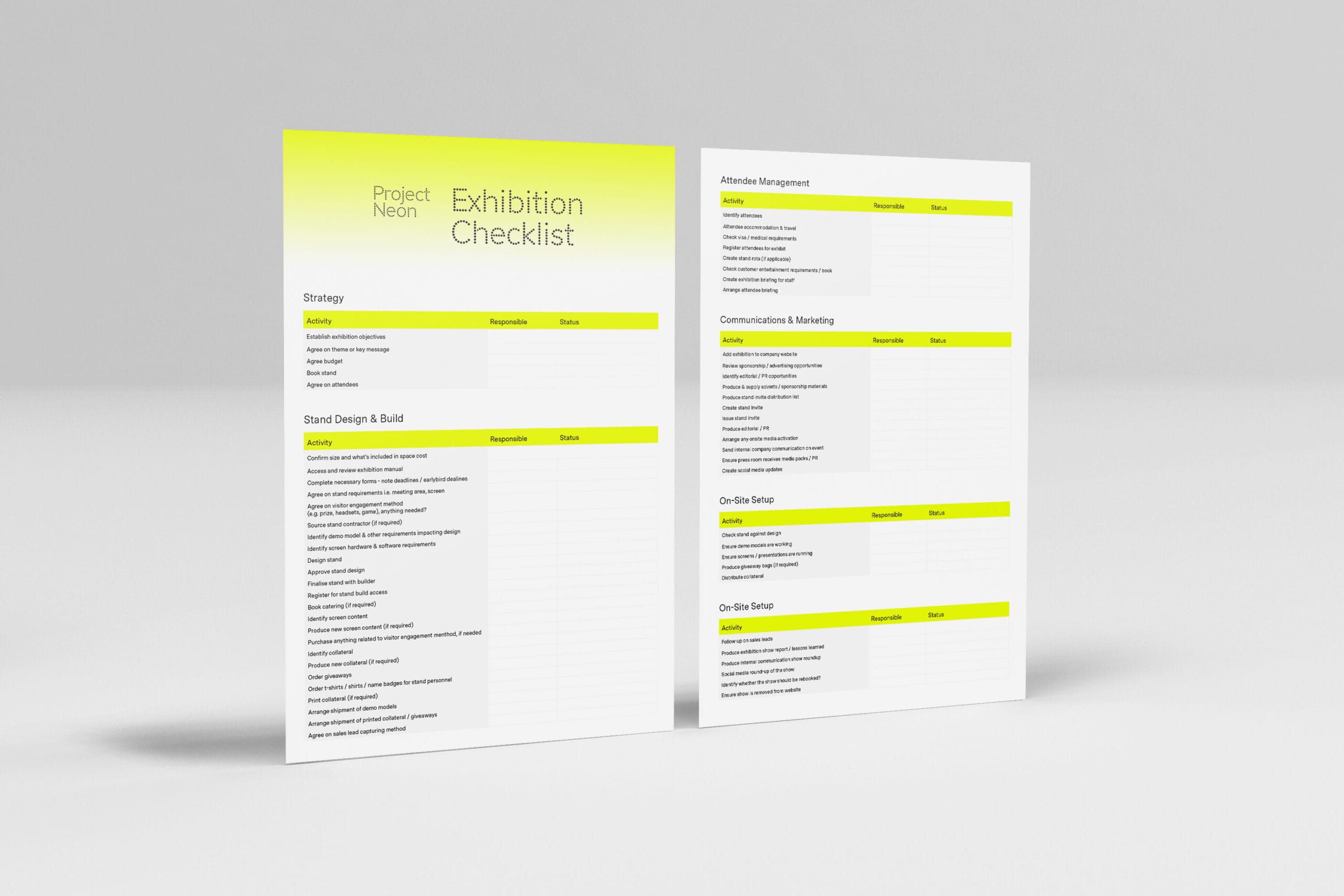
With years of experience, we’ve created the Project Neon Exhibition Checklist. This is not just a list – it’s a living, breathing framework designed to get you thinking and ensure no detail is overlooked.

This checklist covers everything from the essentials (stand design, power requirements, and shipping deadlines), to the finer touches (branded giveaways, lead capture tools, and post-show follow-ups).

It includes every aspect of the event lifecycle and provides a discussion framework to ensure everyone has clarity, accountability, and peace of mind that all bases are covered.

Having spent years sharing this checklist with our clients, we’re now sharing it with you!

Download it now and be empowered! We hope it helps you, or others in your organisation understand the full scope of what goes into a successful exhibition. Use it to align teams, streamline communication, manage budgets and reduce last-minute surprises.

Get a copy of this checklist now:

Why start planning now, not later?

Take ONS 2026, for example, with the show just one year away, the countdown to ensure your presence is successful, has already begun.

 So don’t delay! Here are some reasons why early planning matters:

  • More creative freedom: With more time, we can explore bold, innovative design concepts that truly stand out.
  • Better budget control: Early planning allows for smarter allocation of resources and avoids last-minute costs.
  • Prime positioning: Early birds often get the best stand locations, closer to foot traffic and key industry players.
  • Stronger messaging: You’ll have time to refine your brand story and align it with the event’s theme and audience.
  • (Almost) Stress-Free execution: Let’s be honest – planning events can feel like trying to do five things at once with a deadline ticking. When you’re considering logistics, procurement, design, campaigns and approvals, the more time you have the more you can breathe a little easier.

We’ve supported clients at some of the world’s most influential energy and technology exhibitions, including:

  • OTC & ATCE (USA)
  • ONS & IADC (Norway)
  • Offshore Europe (UK)
  • ADIPEC & MEOS (Middle East)
  • AOG & EXA (Australia)
  • IPTC, OTC Asia & APM (Asia Pacific)
  • GeoTHERM (Geothermal)
  • Global Offshore Wind (Renewables)
  • EAGE & IMAGE (Geoscience)
  • Norshipping (Shipping)
  • AquaNor & Nor-Fishing (Aquaculture)

Whether you’re launching a new product, building brand awareness, or strengthening industry relationships, we’ve helped our clients stand out with purpose and precision.

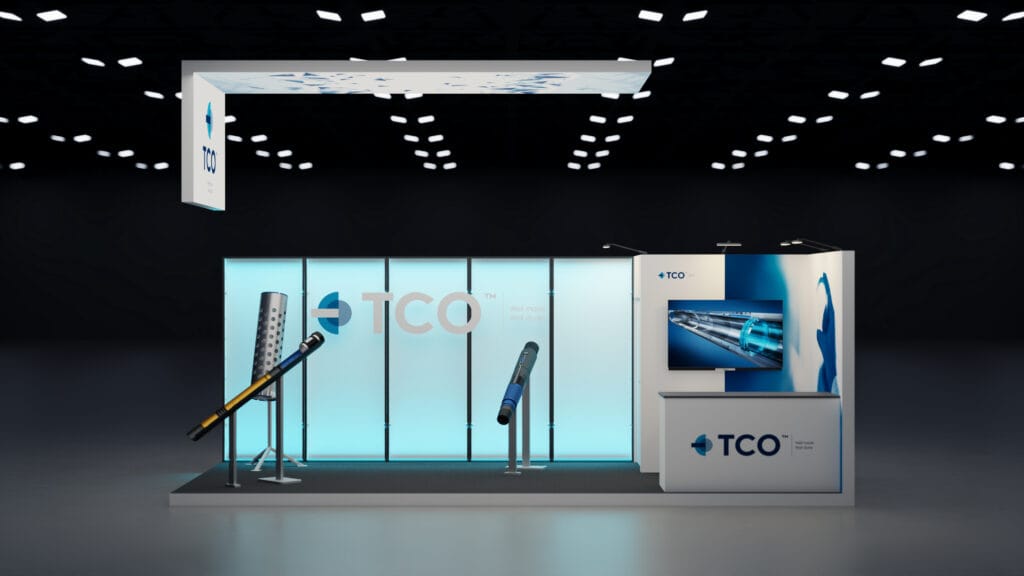
“Project Neon made our ONS presence unforgettable. From concept to execution, they nailed every detail.”Elisabeth Balchen Gundersen, TCO

With years of experience in sector relevant event management, we can help you with your next event. So, whether it’s a modest shell scheme or a show-stopping custom build, give us a shout if you want an exhibition partner who knows the global event landscape.

Beyond stock: how AI-generated images are transforming visual branding 

At Project Neon, we’re always exploring innovative ways to help our clients stand out. One of the most exciting tools in our creative arsenal today is AI-generated imagery. AI enables us to craft distinctive, brand-aligned imagery that captures the essence of a client’s business, audience, or sector, especially in environments that are difficult to access or represent.

A smarter way to visualize the unseen 

Some environments are notoriously difficult to capture, like offshore oil rigs, remote industrial sites, and high-security facilities. Organising a photoshoot in these locations can be not only costly, but also logistically complex. That’s where AI can step in. 

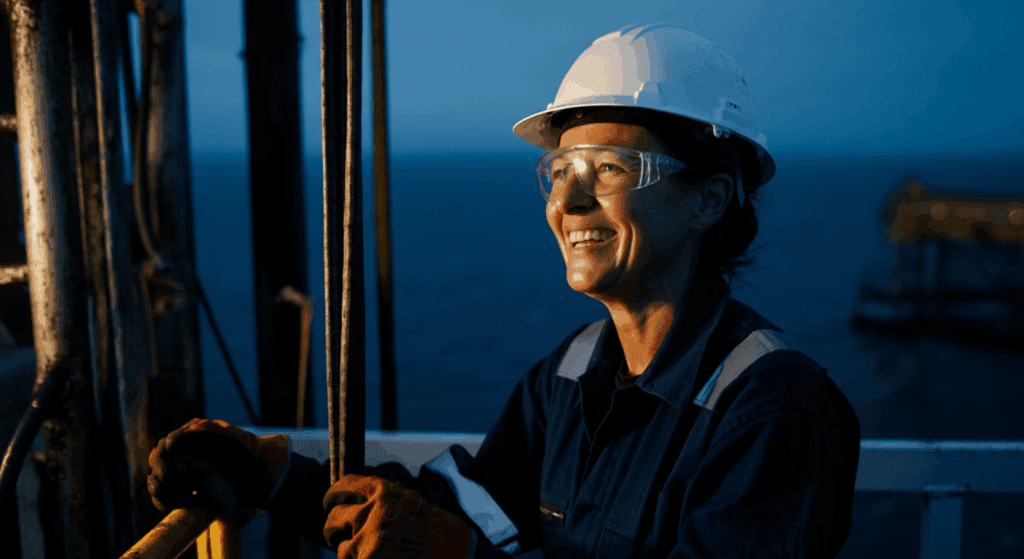
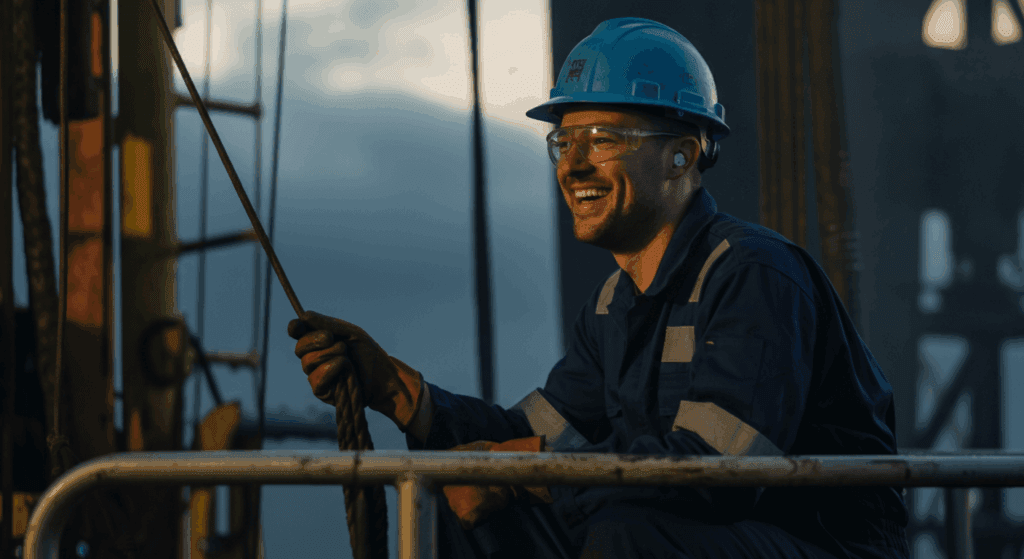
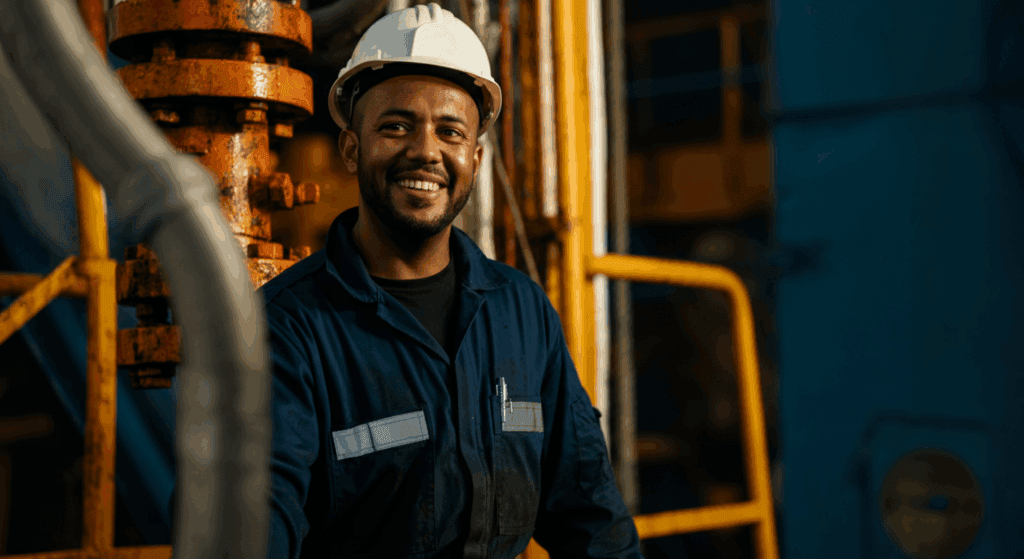
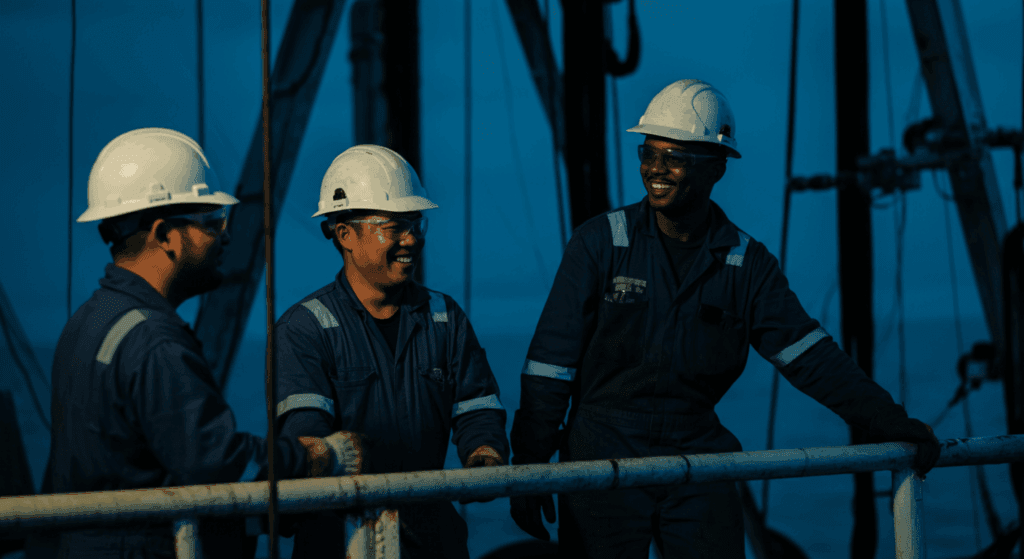
Take our recent work with Keystone as an example. Their core audience? Offshore operations teams. Instead of coordinating an expensive offshore shoot, we used AI to generate a series of bespoke images that authentically represent this environment. The results are visually compelling and strategically aligned with Keystone’s brand identity. Notice the consistent use of blue tones throughout the imagery, an intentional choice to reinforce Keystone’s colour palette and visual language. 

AI as a creative partner, not a replacement 

Let’s be clear: AI is not here to replace photographers. Real-life photography captures the authenticity, emotion, and human connection that no algorithm can replicate. Professional photography remains essential for showcasing your people, culture, and real-world presence. 

However, every brand needs a library of industry-specific, situational, or conceptual images that complement photos from employees. Traditionally, businesses have turned to stock photography for this. But stock images are often generic, overused, and rarely aligned with your brand’s unique tone. 

AI-generated images offer a compelling alternative. They allow you to build a custom image bank that is: 

  • Tailored to your brand guidelines 
  • Consistent in style and tone 
  • Free from licensing restrictions 
  • Visually aligned with your digital platforms 

AI images perform well in digital environments. Whether you’re refreshing your website, launching a social media campaign, or updating your internal comms, AI visuals can provide a fresh, cohesive look that feels uniquely yours. 

That said, AI does have its limitations, especially when it comes to large-format printing. For exhibition stands, posters, or banners, the resolution of AI-generated images may not meet the high standards required for print. In these cases, professional photography or high-resolution renders remain the gold standard. 

From our designer 

While AI-generated imagery opens up some incredible creative possibilities, it’s not without its quirks. Getting the perfect image often takes a lot of fine-tuning, the prompts need to be very specific, and it can take multiple rounds of editing to land on the right scene.  

People are particularly tricky; AI can struggle with realistic human features and poses. And when it comes to highly technical subjects – like niche equipment or specialised industrial setups – AI sometimes falls short, simply because there aren’t enough accurate reference images online for it to learn from.  

That said, the pace of development is astonishing. The improvements we’ve seen in just the past year are huge, and the software is evolving on a near-weekly basis. We’re constantly keeping up with the latest advancements, and if progress continues at this rate, who knows what will be possible a year from now! 

The winning formula: blend AI with reality 

The real magic happens when you combine the strengths of both worlds. Use AI to build a flexible, brand-aligned image bank for digital use, and complement it with authentic, high-quality photography for people-centred storytelling. This hybrid approach gives you the best of both: efficiency, creativity, and credibility. 

At Project Neon, we’re not just using AI for the sake of innovation, we’re using it to solve real-world challenges and elevate our clients’ visual identities. 

Want to see what’s possible? Check out the AI-generated images we created for Keystone. They’re proof that with the right tools and creative direction, the future of limitless brand imagery is already here. 

Neon Nights: The story so far

At Project Neon, we’re more than a team; we’re a mosaic of cultures and perspectives. Norwegian, Scottish, English, Irish, Portuguese, French and Italian minds working side by side. We thrive on collaboration, and we believe that great ideas are born from great conversations. 

We wanted to create a space where those conversations could happen more often locally. Stavanger is a city that’s as international as it is innovative, full of expats, professionals, and creatives who are eager to connect. We couldn’t regularly find a space to do this, so we decided to make one ourselves! 

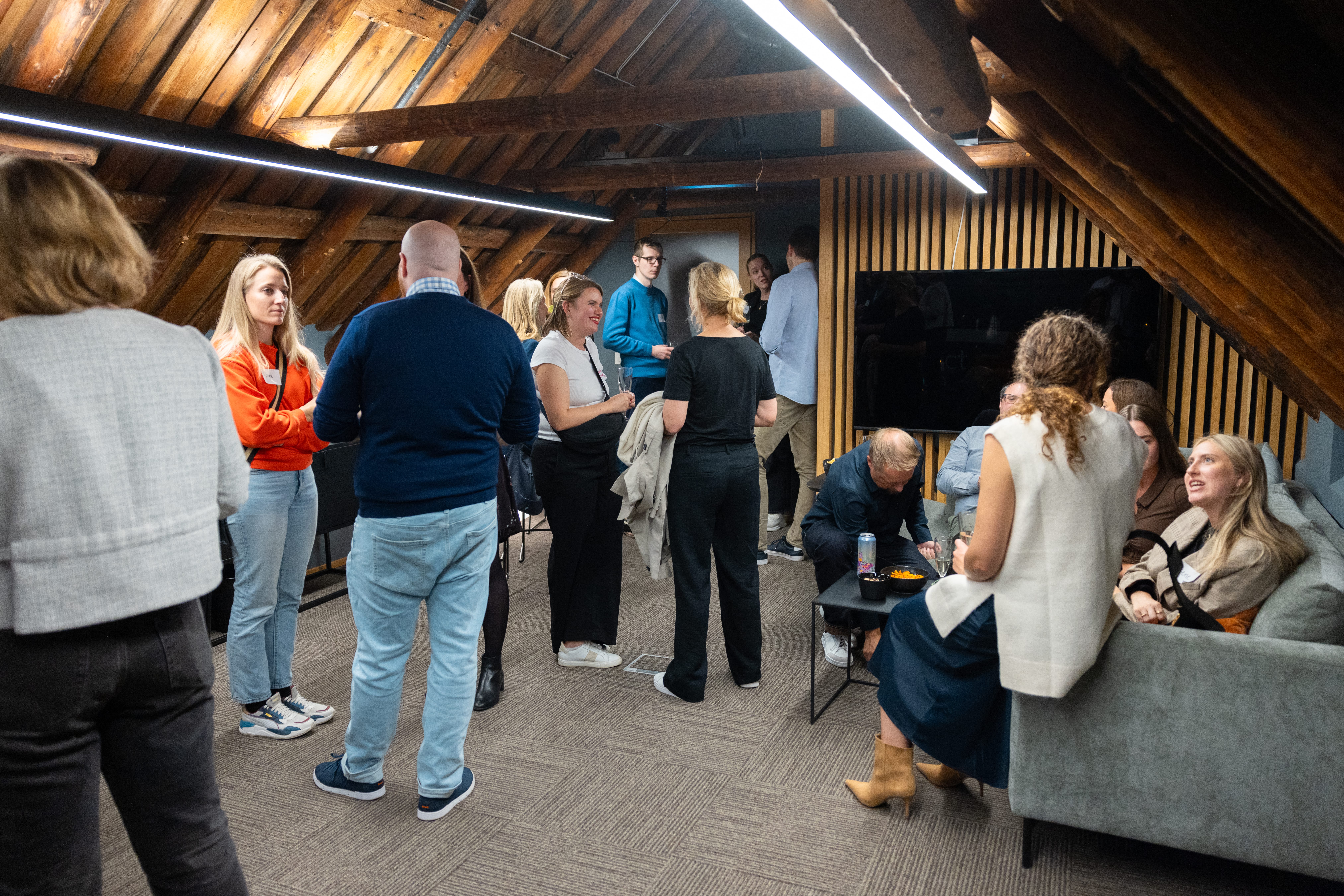
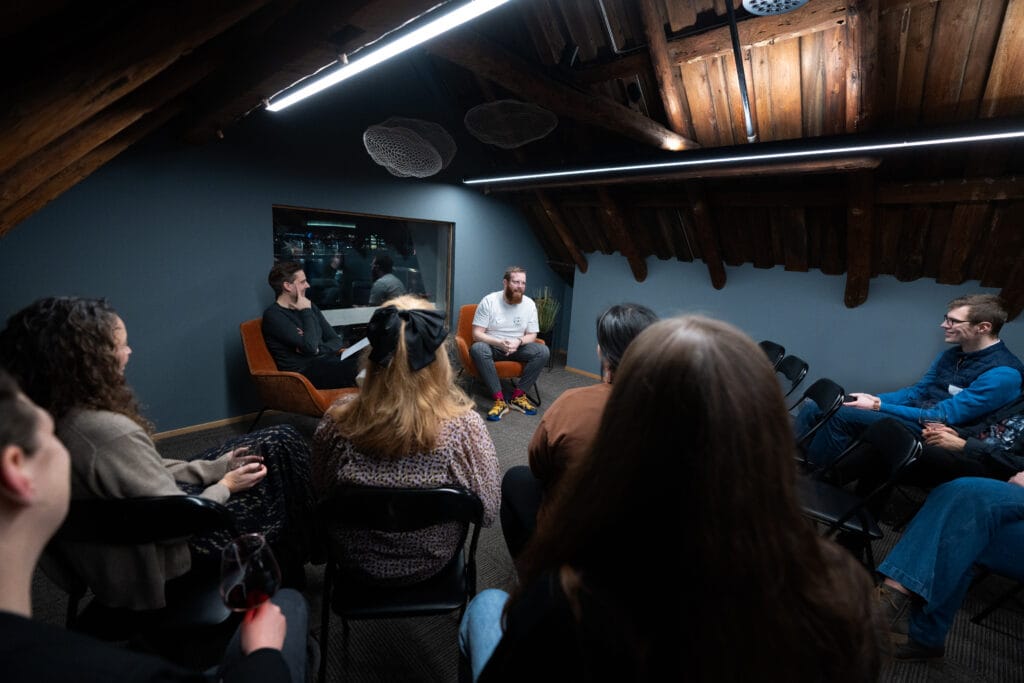
Neon Nights launched in February 2023. A free, informal event series where a guest speaker is invited to share their story in a relaxed “fireside chat” format. After that, the evening is all about open discussion and networking. 

What is Neon Nights?

Neon Nights isn’t your typical industry event. It’s: 

  • Casual – Come as you are, grab a drink, and unwind after work. 
  • Inclusive – Held in English to welcome Stavanger’s international crowd. 
  • Community-driven – Focused on building real relationships, not just LinkedIn connections. 

The Project Neon team has been described as enthusiastic and colourful and these events reflect exactly that. The event is engaging, and full of the kind of energy that makes people want to stay long after the official program ends. 

Real connections, real impact 

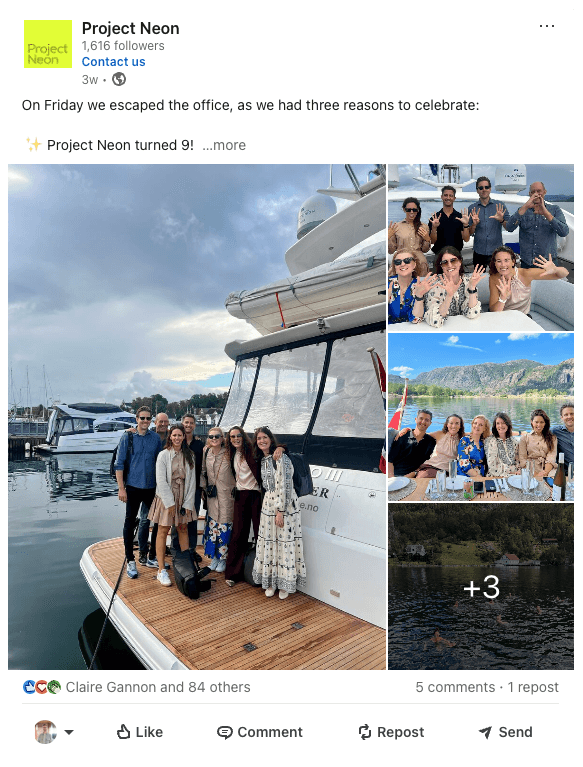
So far, we’ve hosted 9 events, and the stories that have come out of them are the reasons we keep hosting them: 

“The journey that began with curiosity and ambition led me right to where I needed to be. 
 
I had been attending Neon Nights for a while, each event bringing fresh energy and intriguing opportunities. One particular evening stood out – the next gathering was hosted by a company I had long admired, one I had hoped to work for someday. It felt like the perfect chance to gain insight into their world. 
 
As fate would have it, my plans shifted unexpectedly. Instead of mingling with potential future colleagues, I found myself attending a presentation by one of my own coworkers. A twist I hadn’t anticipated – but one that, in hindsight, made all the difference. 
 
Fast forward a year, and I’m celebrating my one-year work anniversary. Project Neon continues to draw in industry leading voices.” – Andreea Elizabet Ungureanu, ONS 

“Neon Nights has quickly become one of my favourite fixtures on the calendar. Every gathering delivers a great and relevant chat with local marketing leaders, followed by relaxed mingling. Because the talk comes first, everyone walks into the mingling session with ideas and an easy conversation starter – no awkward small talk.  

I’ve made some great connections and collaborated on multiple projects with people I met during the post-talk mingle. Huge thanks to the Project Neon team for creating such a fantastic forum for Stavanger’s marketing community; See you at the next one!”  – James Froment, Flare Media 

“Neon Nights truly offers the ideal synergy of professional development and networking opportunities. It brings together industry experts who share insights on pertinent and engaging topics within a welcoming, diverse, and approachable community, complemented by an excellent post-event reception. Beyond fostering new connections, Neon Nights has been instrumental in sparking successful collaborations, resulting in the delivery of six projects to date with Project Neon. I highly recommend Neon Nights to anyone aiming to advance professionally and forge new friendships.” – Ambrozie Pura, Rendering.no  

Even for those of us at Project Neon, Neon Nights has been a fantastic place to make great connections. It’s where we first met Ambrozie Pura from Rendering.no, who’s now our go-to for 3D animation. It’s also where we connected with James from Flare and Andres Denesh Gerbasi from Rastløs. Since then, they’ve become part of our extended creative team, collaborating with us on multiple projects.  

These stories aren’t just anecdotes; they’re proof that valuable connections can make a true impact. 

Project Neon offices in the heart of Stavanger

Our Speakers So Far 

We’ve been lucky to welcome some truly fantastic local voices, including: 

  • Maiken Økland – Zaptec  
  • Eirik Hogstad – Stavanger Oilers 
  • Marthe Reienes – Stavanger Business Region 
  • Inger Johanne Stenberg – ONS 
  • Hans Ludvig – Lervig  
  • Pål Oftedal – Lærdal Medical  
  • Lena Antonius – Stavanger Kommune  
  • Geir Søndeland, RA Stavanger 

Each one brought a unique perspective, sparking conversations that continued long after the mic was turned off. 

What’s next? 

We’re not stopping here. In fact, we’re turning up the brightness. 

As we look ahead, we’re exploring ways to evolve the Neon Nights format and introduce a second edition with a fresh twist. 
(Spoiler alert: it’s happening in the morning!) 

We want to something that fits different schedules, sparks new conversations, and continues to build meaningful connections. 

 But don’t worry, Neon Nights as you know and love it will always be there! 

To stay in the loop then make sure you keep following us on LinkedIn. We’ll be releasing the latest updates there.  

LinkedIn and Social Media Trends: Preparing for 2025

It’s now over 20 years since LinkedIn launched, and during that time, the world of social media continues to evolve. For marketing and communications professionals this means continually being aware of the transformative changes impacting businesses and professionals.

If you want to stay competitive in 2025, you need to use new trends and tools. What should you know to connect with your audience?

LinkedIn’s role in the 2025 social landscape

LinkedIn is more than a professional networking site. It is now a place for building communities, sharing ideas, and engaging with content. Here’s how the platform is evolving:

Group Engagement: LinkedIn Groups are becoming vibrant spaces for niche discussions and networking. Participating in or managing these groups positions brands as industry leaders while fostering community connections

Short-Form Video Dominance: Video content, including LinkedIn Stories and Live sessions, is increasingly central to engaging audiences. These tools help brands share authentic, impactful messages in an easily digestible format.

Employee Advocacy: LinkedIn’s emphasis on personal branding means employees acting as brand ambassadors can amplify reach and authenticity. Companies benefit from encouraging their teams to share professional milestones and insights.

Focus on thought leadership: Sharing long-form content, insights, and industry expertise is more important than ever. LinkedIn’s algorithm rewards authentic, informative posts, making thought leadership a key strategy for brand visibility

Storytelling: Who doesn’t like a good story? Storytelling is a powerful way to connect with LinkedIn’s professional audience. By sharing your brand’s journey—including challenges, triumphs, and behind-the-scenes moments—you create relatable, engaging content. Use videos or a series of posts to show client testimonials or your team’s culture. This makes your story real and memorable.

Founder content is a growing trend on LinkedIn. Executives and founders are sharing personal insights, industry knowledge, and company news more often. This approach humanizes brands, builds trust, and strengthens connections with audiences. In 2025, leaders must post authentic and thought-provoking content on LinkedIn. This will help improve their company’s image and influence.

While LinkedIn drives professional interactions, other platforms also set significant trends for 2025:

  • Social Commerce: This may not matter to many of our clients. However, it is interesting to see how platforms like Instagram and TikTok are adding shopping features. These changes let users find and buy products easily.
  • UGC – User-Generated Content: Authentic, community-driven content continues to outperform traditional advertising in building trust and engagement.

AI: The game-changer for Social Media Marketing

The world of AI is still evolving, but it’s doing so at a rapid rate. Some people worry about the effects of AI, especially on jobs.

However, as these tools develop, we think that by 2025, AI will not just be a tool for marketers. It will become a key partner for them. AI was once seen as a tool for content generation. Now, it plays a key role in improving strategies, optimizing workflows, and inspiring creativity.

  • Strategic refinement: AI analyses vast amounts of data, offering actionable insights into audience behaviour, best posting times, and content preferences. For example, AI tools on platforms like Hootsuite help marketers fine-tune campaigns for maximum engagement.
  • Streamlined organization: Messy brainstorming sessions become clear, actionable plans. AI helps create structured content and presentations.
  • Improved creativity: AI helps with idea generation and trend analysis. It acts as a brainstorming partner for marketers. This support allows them to create innovative campaigns that fit their audience.

Like many things valuable input creates more valuable outputs. As you use AI in your work, it’s important to try different prompts. Explore tools that are specific to your platform. Share your AI knowledge with your team. By embracing AI thoughtfully, marketers can transform their processes without losing the human touch… and this is the key.

Preparing your strategy

To thrive in 2025, brands should:

  1. Explore AI tools: Experiment with features across platforms to identify tools that align with your goals.
  2. Master AI prompting: Hone the art of guiding AI for better content, analytics, and engagement ideas.
  3. Foster employee advocacy: Encourage team members to become LinkedIn influencers and community leaders.
  4. Prioritize thought leadership: Position your brand as an industry expert through valuable and authentic insights.
  5. Experiment with video: Prioritize short-form video and livestreaming to meet audience preferences.

By using LinkedIn’s new features with AI insights and social trends, marketers can create stronger, more genuine connections. This helps them stay ahead in a fast-changing digital world.

Don’t just take our word for it, check out Evergreen Social and Hootsuite  for more info on this topic!

Use event marketing to build authentic connections

In an increasingly digital world, where virtual interactions dominate our daily lives, the value of face-to-face connections cannot be underestimated. With its ability to bring people together in a shared space, events are powerful opportunities for us all to engage, create memorable experiences and drive personal and professional growth.

Building Authentic Connections

Unlike traditional marketing channels, events provide you with good old fashioned ‘work the room’ opportunities. Events also attract a diverse range of attendees, providing you with the opportunity to meet a range of different contacts, not only to generate sales leads but to create wider opportunities.

When it comes to building authentic connections at an event, here are some suggestions to help facilitate interactions and get the most from your attendance:

Business Cards

Yes, it seems obvious, but the classic schoolboy error is to show up with no cards. Show that you are prepared and interested in maintaining a connection beyond the event with professionally designed and branded cards.

Pro Tip: Embrace the shift from paper business cards to digital. With digital business cards, you instantly share your contact information. Tap your card against a smartphone and share your contact details. It can act as an ice breaker or as a memorable way to bring your conversation to a close. Check out TAPiTAG.

digital business cards

Research and Familiarize

Take the time to research and understand the companies who are attending and the services they offer. This knowledge allows you to identify potential partnerships or check in with better-known competitors. Create a plan for who you want to speak to and consider getting in touch before the event, to get some pre-agreed meetings in the diary.

Harness Social Media

Make sure people know you are going to be there. Share your attendance on your personal LinkedIn page and if you’re only there for a limited time then make that clear.

Pro Tip: Look for the official event hashtag and use it. Usually, you can find them on the organizer’s website or social media. By using the event hashtag, you will ensure that your post will be at the heart of the conversation around the event, allowing you to interact with like-minded attendees. Boost your reach!

Conversation Starters

Not everyone is confident to dive straight into conversations. Prepare some industry questions to help you initiate conversations. Engaging conversation starters can help break the ice and foster deeper discussions. Alternatively, kick-off by asking them to tap your new digital business card on their phone!

Show your expertise

Before the event, demonstrate your expertise by providing value. Share relevant content such as blogs, reviews, interviews, or industry podcasts highlighting your knowledge and making it clear what people can talk to you about. By positioning yourself as a thought leader and sharing valuable insights, you establish credibility and generate interest.

Company attendance

if your company are exhibiting then be familiar with what’s being presented. Speak to the stand organisers and ensure you’re familiar with what your company are doing, and focusing on, at the show. If you work for a larger organisation, then see who is attending from other offices or locations and build your internal network as well as your external one.

Event marketing still presents a unique opportunity to build authentic connections in an increasingly digital landscape. By activating some of these suggestions you can untap the potential of event marketing and forge lasting connections that go beyond the event itself.