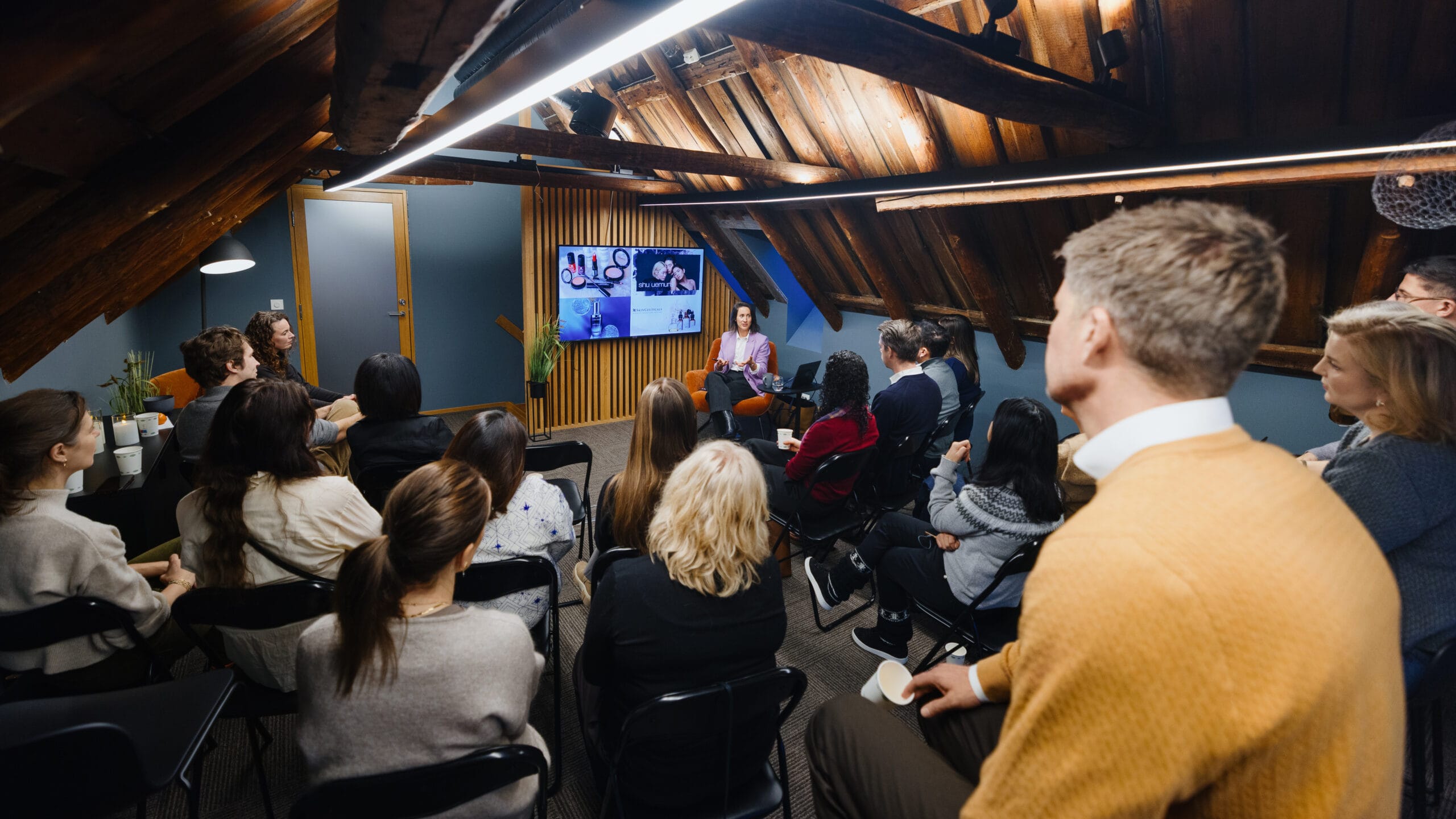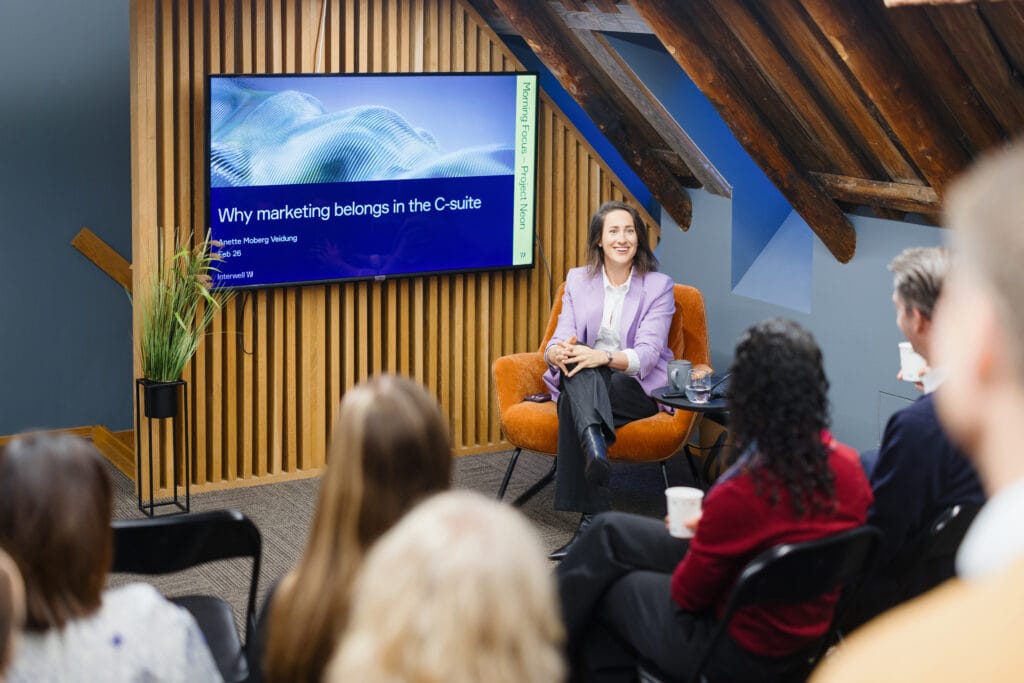
Morning Focus with Anette Veidung, CMO at Interwell
“It’s only when marketing is strategic and not just tactical, it becomes a source and an amplifier of sales and growth. That’s why it belongs in the C-suite.”
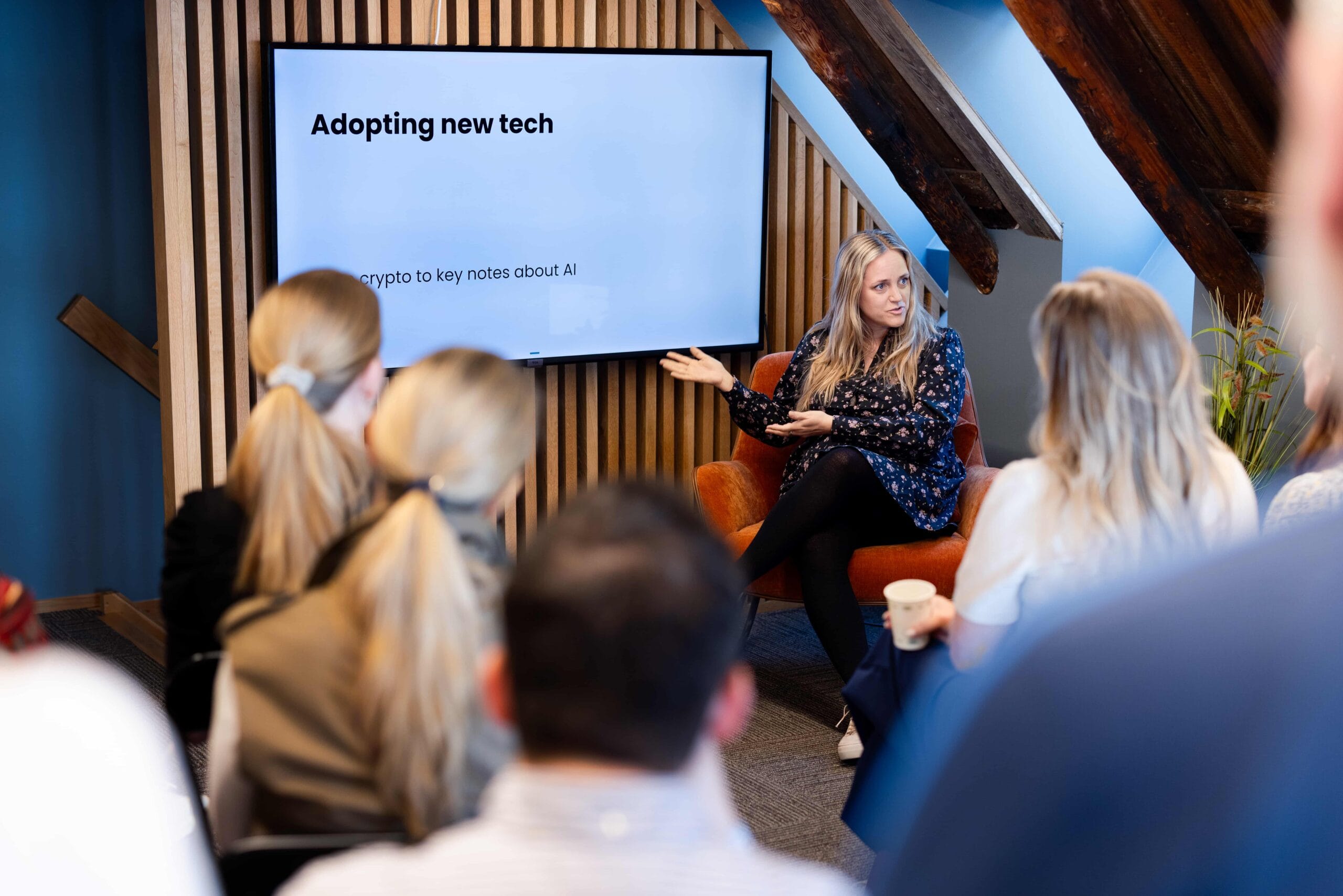
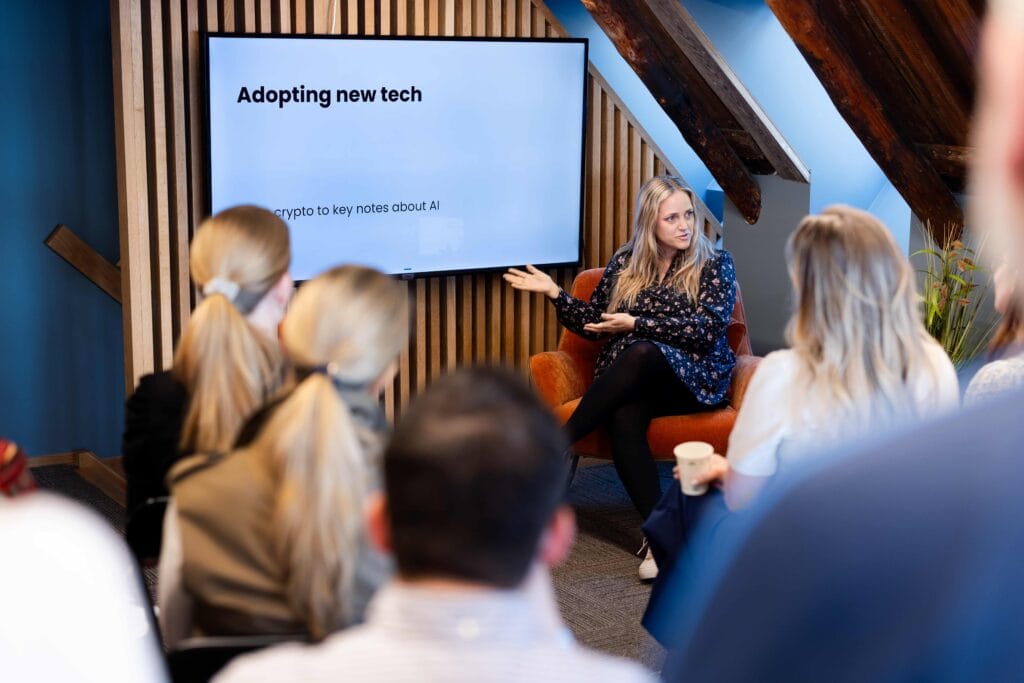
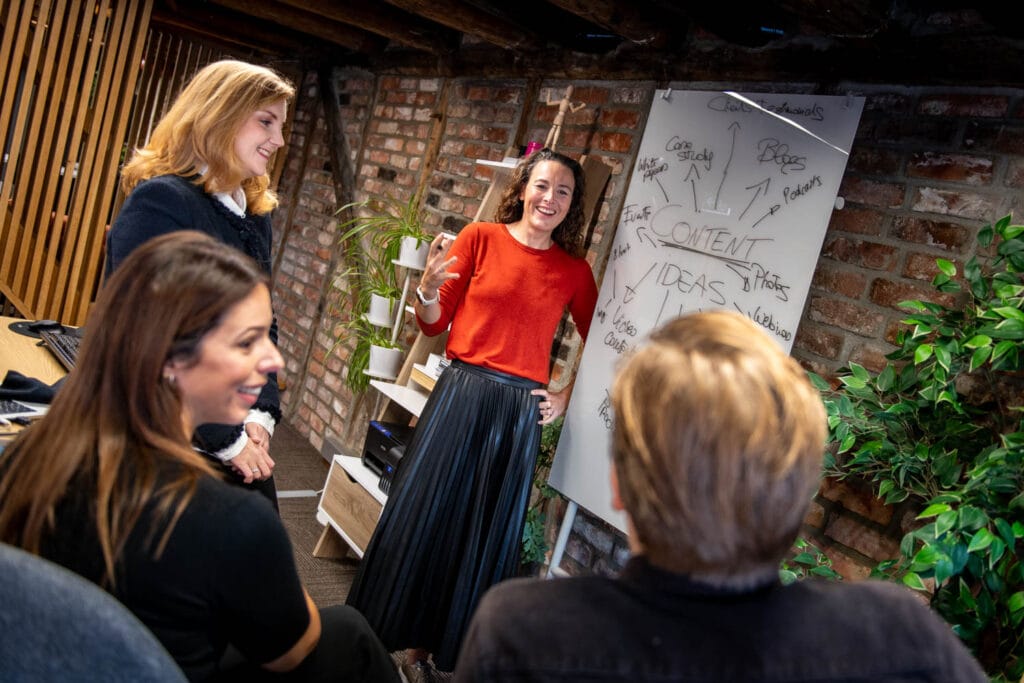
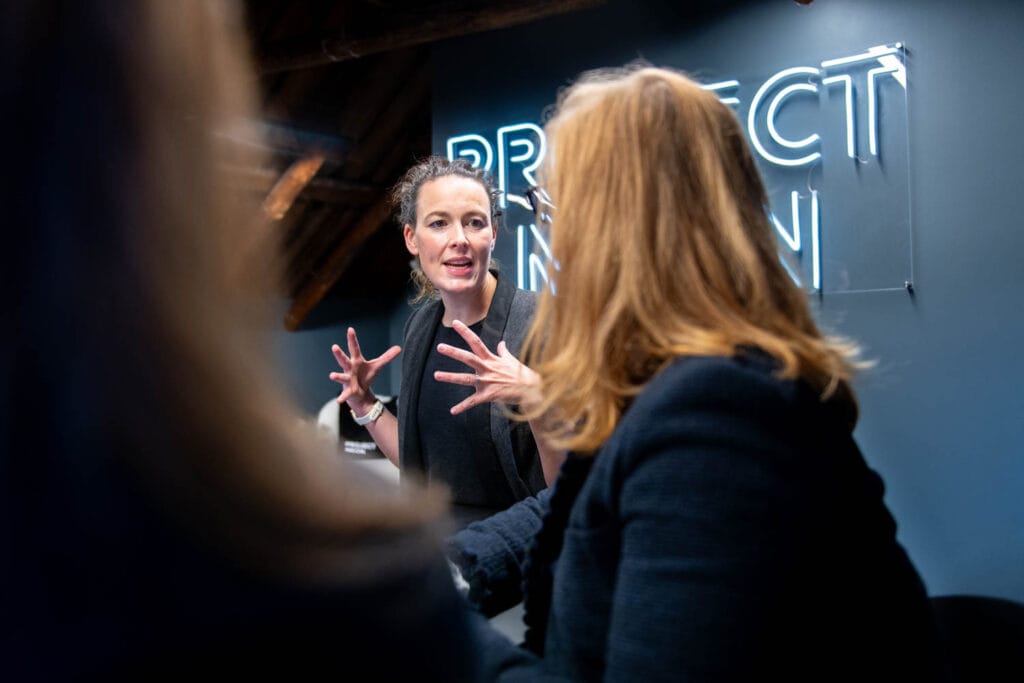
This was the topic Anette Veidung, CMO at Interwell, had everyone chewing over at our first Morning Focus event of 2026.
Speaking candidly about her impressive, international career spanning beauty, biotech, green tech and oil and gas, Anette shared how marketing only creates real value when it’s treated as an essential commercial function – not a support act. And whilst industries, distribution channels and customers have changed over the years, the red thread guiding her work has always been deeply rooted in strategy.
“Strategic marketing decides who gets remembered, trusted and earns the dollars.”
B2B marketing strategy
At its core, marketing strategy answers the big questions: How do we differentiate? How do we position ourselves in the customer’s mind? How do we build brand equity? And how do we create alignment?
“Without alignment, you end up with scattered arrows — some might hit the target, but most will fall to the ground.”
One of Anette’s most compelling examples to illustrate this came from a major rebrand in the oil and gas sector – a move shaped around three key principles: be relevant, be attractive and stop hiding. This wasn’t just about modernising visuals, but about uniting multiple business units, clarifying positioning and future-proofing the company for a changing energy landscape. The result? Stronger perceived quality, clearer differentiation and a brand that employees and customers could recognise and rally behind.
Set up for success
But influence doesn’t come from branding alone. Anette explained how marketers build credibility internally by understanding sales, being commercially fluent and tying marketing activity directly to business outcomes.
“If you don’t understand how the money is made – or lost – you can’t expect marketing to influence strategy.”
The conversation resonated because it was honest. About ambition. About burnout. About the tension between purpose and profession. And about the reality that stepping into strategic influence often means educating on marketing at leadership level, pushing for clear value propositions and challenging the status quo.
As the discussion drew to a close, one thing was clear: marketing doesn’t become strategic by title alone. It earns that position through speaking up, asking for influence and claiming strategic space deliberately, rather than waiting to be invited to the table. And judging by the conversations that ensued, hopefully more marketers now feel encouraged to pull up a chair.
Learn more about our events here and follow us on LinkedIn for updates on the next one
Amid year-end deadlines and project wrap-ups, marketing planning often gets pushed to January.
Well, it’s January now.
To ensure marketing supports growth in 2026, you must plan before the year slips away.
If you need a clear plan, here’s our guide to creating a proactive marketing strategy for 2026. It’s practical, structured, and designed to maximize your year ahead.
Start with Business Goals
Before diving into campaigns or content, connect marketing to the larger strategy.
What are the company’s goals for 2026?
Revenue targets
New markets
Operational changes
Internal priorities
Are any big-picture changes needed?
Updated positioning
A refreshed brand
Clearer messaging
New value propositions
What does the commercial team need?
Marketing should back tenders, agreements, key accounts, and sales pipelines—not act alone.
Any recruitment or employer branding needs?
Talent attraction is vital in energy, maritime, and technology. Marketing should support this.
Answering these questions ensures your plan is driven by purpose, not just momentum.
Audit 2025: Internally and Externally
Effective planning starts with evidence, not guesses.
Review:
Your Performance
What worked well?
What didn’t?
Did your campaigns impact the pipeline?
Where did engagement come from?
What does your website data show?
What did your sales team observe?
Did you receive client or prospect feedback?
Market & Competitors
Have competitor messages changed?
Did new players enter the market?
Are customers changing how they buy?
Are regulatory, ESG, or industry pressures affecting purchasing?
Is the market moving faster or slower than expected?
These questions turn speculation into clarity and ensure your plan reflects the actual environment.
Reassess Your Audience
Markets shift, and so do audience priorities and pressures. While your customer or job title may remain the same, their needs might not.
Consider:
Has your buyer changed?
Are new stakeholders influencing decisions?
What are their pain points for 2026?
How do they consume information?
Are your messages still relevant?
Strong marketing meets current needs, not just repeats last year’s assumptions.
Understand Your Budget Reality
Aspirations can be limitless, but budgets are not. You need a plan that fits your business reality.
Develop a plan for the budget you have (or can ask for) and ensure it’s achievable, not just theoretical.
Assess internal capacity and capability
Even the best plan fails without the right people, tools, and processes.
Ask:
Do you have the capacity to execute consistently?
Are your systems (CRM, CMS, analytics) suitable?
Are roles clear?
What should stay in-house, and what can be outsourced?
Where can specialist support help your team or speed up progress?
This step ensures your plan is strategic and executable.
Strengthen Your Owned Channels
Before looking outward, focus on what you control—your own channels.
Website: Does it reflect your capabilities? Is the content current? Does it support sales?
Social Media: Are your platforms active, consistent, and purposeful?
Email: Is your database clean? Are you communicating regularly?
Owned channels often deliver quick wins. In an AI-driven world, your website should serve as a credible content hub for visibility, authority, and search readiness.
Identify Opportunities Early
Visibility doesn’t happen by chance. It comes from planning ahead.
Look for:
Industry events and conferences
Speaking opportunities
Awards
Editorial calendars
Key product or company milestones
Partnerships or sponsorships
Mapping these out early gives your marketing team the lead time to create impact rather than scramble.
Build a clear, realistic content and campaign calendar
Consistency is key. Avoid the “we need to post today” rush. A calendar won’t write the content for you, but it will guide your messaging.
Your calendar should include:
Monthly themes or focus areas
Planned campaigns and deadlines
Events, milestones, and announcements
Content cadence for each channel
Ownership and responsibilities
This should be a tool for clarity, not rigidity. Stay flexible and adapt to business needs or new opportunities.
Align internal teams
A strong plan only works if everyone knows it exists.
Ensure:
Leadership agrees on priorities
Sales is aware of what’s coming and aligned
Subject-matter experts know when they’ll be needed
Everyone understands the purpose and outcomes
Effective marketing cannot happen in a vacuum. Company-wide support reduces bottlenecks and strengthens delivery.
Define How You’ll Measure Success
What does success look like? Discuss and decide upfront:
What you will measure
How often you’ll review it
Who is responsible
How insights will influence decisions
Success must be defined; otherwise, it’s just activity.
Make the Plan Usable
A marketing plan shouldn’t be a static document. It works best when it’s lived, used, and updated.
Create a framework that:
Helps you prioritize what matters
Aligns activities with business goals
Creates sustained momentum instead of reactive bursts
Provides structure while allowing creativity and adaptability
To make your 2026 marketing effective, not just busy, this is where it starts.
A Final Thought
January shouldn’t be spent debating whether to plan. It should be about putting a clear, agreed plan into action.
A solid plan gives you momentum from day one and keeps marketing aligned with business needs.
If you want support in shaping a structured, commercially aligned plan for 2026, we’re here to help.
Reach out, and let’s set your marketing up for its best year yet.
In 2026, LinkedIn’s content ecosystem looks very different. The old “algorithm” that once rewarded posting frequency, timing hacks, and superficial engagement has been replaced by something much smarter, an AI-powered recommendation and visibility system called Brew 360. This shift isn’t a minor tweak. It rewires how content gets seen, who it reaches, and what actions truly drive influence on the platform.
In this article, we unpack what Brew 360 actually is, why many old tactics no longer work, and how professionals and companies should adapt their LinkedIn strategy in 2026, with practical steps backed by expert insights.
What Is LinkedIn Brew 360?
LinkedIn’s Brew 360 isn’t just another algorithm update, it’s a comprehensive AI-driven content visibility system that interprets the meaning behind what people post, who they are, and who might genuinely care about their content. Unlike the legacy model, which mostly counted likes, comments and basic engagement signals, Brew 360 understands context, language, and professional relevance.
Under this system:
Content is evaluated for semantic relevance, not surface-level metrics
The system learns from your historical activity and expertise signals
Visibilityis personalized, not everyone gets the same treatment
Engagement quality (e.g., saves and thoughtful comments) matters more than quantity of reactions
In short, Brew 360 reads like a human editor, prioritizing clarity, relevance, and real value over tricks and shortcuts.
Why traditional LinkedIn tactics no longer work
Many professionals have noticed that impressions and reach are down, even for high-quality content. But this isn’t because LinkedIn is broken. It’s intentional. Brew 360 shows fewer posts to smaller but more targeted audiences, rewarding content that genuinely serves the right people.
Here’s what has changed:
Engagement and hacks are dead. Games like tagging long lists of people, posting at “magic” times, chasing likes, or using engagement pods are now actively detected and deprioritized. Brew 360 reduces visibility for content that feels forced or off-topic
Frequency doesn’t mean visiblity. Posting constantly no longer increases reach. Instead, the system favors focused consistency over sporadic bursts of volume. Quality is now the central signal.
Hashtags no longer influence content distribution. LinkedIn now identifies recurring themes across your posts to understand what you consistently talk about and who should see your content. Profiles and companies that focus on two or three defined areas of expertise achieve more stable and highly targeted visibility.
How Brew 360 actually works (behind the scenes)
According to LinkedIn experts and real user experience. reads more than your post. It examines:
Your profile information (headline, About, experience)
Historical posting patterns
What you engage with
Comment quality and conversation depth
Which audiences find your content valuable
Consistency shapes credibility
Posting tightly around 2–3 core topics helps Brew 360 understand your niche. This thematic consistency leads to more stable and relevant reach.
AI-generated or templated writing is penalized
Because the system detects patterns, generic or template-style content gets less visibility. Authentic, human language wins.
Saves and thoughtful engagement are high-value signals
When people save a post or engage with a meaningful comment, LinkedIn interprets that as long-term value. These signals significantly boost visibility and longevity in the feed
What this means for individuals
Under Brew 360, your LinkedIn strategy should shift from gaming visibility to building credibility and value. To succeed:
Engage in your niche consistently: likes and replies in your field signal relevance.
Align your content with your professional identity: make sure your headline, About section, and posts tell a cohesive story.
Focus on fewer, higher-impact posts:1–2 thoughtful posts per week beat daily shallow broadcasting.
Write clearly and teach something useful: explanations, frameworks, and lessons outperform generic observations.
Encourage thoughtful discussion: questions and reflections that spark real comments matter more than surface reactions.
What this means for companies
Company pages are especially impacted. Organic reach has declined because Brew 360 now prioritizes relevance at scale over broad visibility. To adapt:
Define your focus clearly: your company description and tagline are now key signals.
Create audience-specific posts: avoid generic updates for everyone; target content by sector or role.
Use visuals to clarify, not bait: charts and carousels perform best when they illuminate insights.
Leverage employee advocacy: early, thoughtful comments from internal experts amplify reach and credibility.
Invest in a proper Paid Advertising strategy to pair with organic publications
Organic visibility can still work, but it works differently: through relevance, precision, and coordinated engagement.
Seven strategic shifts you can apply now
Here’s a concise action plan based on expert insights from LinkedIn strategists:
Refine your professional narrative: make your expertise crystal clear in your profile and posts.
Pick 2–3 core topics and post consistently around them.
Write for clarity, not cleverness: avoid AI templates and buzzwords.
Encourage real discussions: questions that require thought signal value to the algorithm.
Focus on saves and long-term utility: craft posts people will want to bookmark.
Coordinate employee engagement thought-leading comments matter more than generic replies.
Pair organic content with LinkedIn Advertising for scale and frequency control
For professionals and brands who adapt early, Brew 360 offers a significant competitive advantage. For those relying on outdated tactics, visibility will continue to fall.
Want help mastering this new landscape? Stay tuned for our Project Neon guides on advanced LinkedIn strategy or contact us for a tailored audit.
In 2025, Norwegian oil and gas investment has remained at high levels as operators mature new field developments and sustain drilling activity across the Norwegian continental shelf.
According to Statistics Norway, total oil and gas investments are expected to peak at around NOK 275 billion in 2025, before easing slightly to around NOK 230 billion in 2026.¹
At the same time, Norway is accelerating investment in green and efficient shipping, reinforcing maritime activity as one of the nation’s most significant export arenas.²
Government initiatives such as the UK–Norway Joint Strategic Partnership (2024) and the Green Industrial Partnership (2025) highlight Norway’s commitment to collaboration and cross-border innovation — drawing on global learning to fast-track the green transition and the path to net zero.
This blend of large-scale offshore projects, ambitious decarbonisation goals, and high public expectations for transparency makes Norway unlike any other market. Decisions made in Oslo, Stavanger or Bergen often ripple into European energy conversations and shape the agendas of international events like Nor-Shipping and ONS.
For international energy and maritime companies, success in Norway isn’t simply about entering the market – it’s about understanding the values that shape it.
Credibility here is built on openness, technical integrity, and a clear commitment to safety and sustainability.
That’s the purpose of “This is Norway”. We’ve created this guide to help brands communicate in a way that resonates with Norwegian audiences and aligns with local expectations.
For almost 10 years we’ve been supporting international energy and maritime brands. As a Norwegian company, with an international team, we combine deep local understanding with global marketing expertise.
When was the last time you challenged your own practices?
The willingness to rethink and reimagine is what makes communication such a powerful force for transformation.
It was also a theme that came to life in our recent Morning Focus. We were joined by Ruth Siri Espedal Lycke, Head of Communications, Life Cycle at Aker Solutions, who gave us an inspiring answer, showcasing how internal communications is more than a function, it serves as a spark for culture change.
Ruth brings decades of experience spanning journalism, corporate communications, and internal culture building. Her passion for storytelling and employee engagement shone through as she shared the evolution of Aker Solutions’ Life Cycle, a bold initiative designed to activate employees and build a culture of continuous improvement.
Communication as a Tool for Change
For a global company like Aker Solutions, with over 4,000 employees across offices, workshops, and offshore teams around the world, connecting people is no small task. Rising costs and the demand for efficiency meant the organisation needed to engage its teams in meaningful ways that went beyond standard corporate messaging.
Ruth explained that traditional best practices like polished corporate emails, and top-down directives, no longer resonates in today’s fast-paced environment. She quoted Adam Grant:
“A lot of your best practices were built in a world that no longer exists. Instead of clinging to them, you need to look for better practices.”
This mindset led to the creation of the Life Cycle, a 15-minute live event every Friday. With the goal to spark dialogue, share improvements, and make employees feel like active participants in shaping the organisation’s current and future operations.
Power of Playful, Inclusive Communication
Ruth emphasised that successful internal communication doesn’t require huge budgets or advanced multimedia skills. What matters is creativity, commitment, and management buy-in. Additionally, Aker Solutions took full advantage of the opportunity to be playful internally by incorporating AI animations, a theme song, and creative brand elements. This helped to connect with employees in a way that was approachable and relatable.
Life Cycle features a panel of diverse employees each week, offering different perspectives on topics ranging from technical solutions to people-centred achievements. This format has been particularly effective for geographically dispersed teams. The approach also encourages vulnerability and courage: success isn’t guaranteed, but attempting new methods fosters trust and engagement. Since its inception, Life Cycle has attracted 300–600 attendees per week, and managers are now starting to integrate the content into team meetings and in workshops to broaden participation.
Perhaps the most impressive outcome has been the increase in employee ownership and initiative. Staff are now proactively reaching out to leaders like Pål Eikeseth, EVP Lifecycle, with suggestions to improve processes. This is a clear indication that communication can directly influence business performance and operational efficiency. By leveraging communication strategically, Aker Solutions has turned storytelling and employee engagement into tools for driving operational excellence.
Ruth emphasizes that Communication is an enabler for driving cultural change and a support for leadership. Still, it is the direct communication between leaders and employees in meetings and leadership actions that has the greatest impact.
Morning Focus
Networking and peer focused events, like Morning Focus, are invaluable for communication and marketing professionals as they provide a space to pause, reflect, and learn from innovative leaders who are challenging traditional practices.
The session reminded us that courage and creativity are the building blocks for bold communication strategies. And bold communication has the power to transform how organisations operate. For those in internal communications, the insights Ruth shared are immediately actionable: from creating inclusive formats to experimenting with playful storytelling.
If you missed this session, don’t worry – Morning Focus will return in November. Stay tuned for updates!
It’s a Monday morning in mid-September. First thing in the week, I want nothing more than a cup of coffee, a quick scroll through my emails, maybe a glance at the news or LinkedIn updates. But lately, I’ve noticed something strange: my feed feels… flat.
It’s the same overly enthusiastic, “guru” tone everywhere, peppered with emojis, every word capitalized like it’s shouting at me. Honestly, it’s uninspiring. Social media is spammed by ChatGPT and Copilot worded posts. We keep posting content pretending it’s authentic, when the opposite is the case. Everyone is basically just pretending.
Let’s be honest: this stuff might fool some people, but a “geriatric millennial” like me? Not so much. I was there when the digital world started opening up and remember when people poured hours into writing genuine blog posts, keeping them alive with consistency and passion. I witnessed the rise of social media. I’ve worked in companies that invested real time, money, and creativity into building a unique voice across websites, campaigns, and channels.
But today, everything feels different. AI tools haven’t just arrived to help us: they’ve replaced authentic human voices. And somewhere along the way, we stopped using our own creativity. We got lazy. We convinced ourselves that being good at prompts makes us experts in communication and personal branding. But here’s the question that keeps bugging me: where did creativity go? Where did authenticity go? Is it that our perspective and perception also changed?
Are we still able to discern what is “INSTRAGRAM” vs “REALITY”? Are we still able to see the world without filters?
Just a few philosophic questions to start the week!
Jokes aside and spoiler alert: I think that human voices still matter.
The power of authentic content in 2025
In a world flooded with content, what truly stands out isn’t just clever headlines or SEO tricks: it’s authenticity. People want to hear and read stories that inspire, educate, and actually add value to their lives. Something they can relate to. Authenticity isn’t optional, it’s everything.
Sure, AI platforms like ChatGPT, Gemini, CoPilot or Jasper can generate text quickly, based on data and patterns. But they still lack the human spark: the imperfect, emotional, real element that makes content engaging and relatable.
If you’re wondering why your unedited, low-res casual photos of the team get more engagement than a perfectly polished, on-brand carousel, well, you already have your answer.
It’s a changing landscape.
This is just the state of things right now. When I started writing this blog some months ago, it looked very different. I’ve had to update it again and again, because AI is evolving at lightning speed. Tools that seemed impossible twelve months ago are now part of our everyday workflow.
And yet, one thing hasn’t changed: AI still can’t replace human creativity or the personal touch. Yes, it gets (terrifyingly) sharper every day: it learns from our feedback, our experiences, our corrections. But it’s still not there.
Ipnocrazia
I’m thinking here about the fascinating case of the Italian philosopher Andrea Colamedici and his book Ipnocrazia, that appeared on the shelves this spring 2025. WIRED described it as an “Acclaimed Book About Digital Manipulation”. The book was created through a process of philosophical co-writing with artificial intelligence systems, under the pseudonym Jianwei Xun, a fictional character who, according to the author, represents a “collective of human and artificial intelligences.”
At first, it was released in only 70 exemplars, but it quickly became a success: selling over 5,000 copies and translated into multiple languages. Then came the controversy. Critics felt deceived when they discovered it had been written with AI. Some reviewers even accused Colamedici of “cheating” the literary world; El País initially reviewed the book positively, only to retract their article once the AI involvement was revealed.
But here’s the nuance many missed: Ipnocrazia was written with AI, not by AI. There’s a huge difference. In fact, creating a book using AI tools isn’t as simple as typing prompts. It’s a slow, intentional, and highly iterative process. Colamedici didn’t just copy-paste chatbot text: he steered the conversation, refined the language, added philosophical structure, and elevated the raw output into something that could stand as a serious work of thought. Without his guidance, editing, and intellectual framework, the manuscript would have been meaningless.
What makes Ipnocrazia so intriguing is exactly this tension: it’s not “pure” AI work, nor is it a traditional book. It’s a hybrid experiment, showing what happens when human creativity collaborates with a machine. And maybe that’s the uncomfortable truth we’re all grappling with: AI can impress us, even inspire us, but it still depends on the human mind to give it direction and meaning.
So maybe the real question isn’t how far AI can go, but how far we let it go. Where do we decide to stop? Where do we draw the line?
AI enhances, not replaces, human work: a creative partner
Beyond the ethical concerns, one truth stands out: the human element remains irreplaceable. As Tim Soulo, CMO of Ahrefs, puts it: “It’s your knowledge and unique ideas that make your content useful and interesting. Everything else is secondary.”
From philosophical / social experiments to marketing and communications, the lesson is the same: text produced solely by AI falls short. Human intervention is essential. Yes, AI-generated content is becoming more polished, but search engines like Google are constantly refining their algorithms to detect and prioritise human-driven work. Why? Because AI often misses the details (and we all know how important they are), the cultural context, and the emotional nuance that define truly great writing.
A forward-thinking copywriter should ask, “How can I improve with AI?” rather than “Can AI replace me?”
My final 2 cents on the topic.
AI is moving faster than we can fully process. It’s powerful, and it’s here to stay. But it isn’t the protagonist of this story – we are. Used well, AI can amplify creativity, speed up the boring stuff, and free us to focus on what really matters. But it can’t replicate the spark that makes content truly resonate: our curiosity, our imagination, and our ability to connect with other human beings.
So, before you slash your marketing budget and hand the keys to automation, remember this: content is still king. And the best content doesn’t come from an algorithm. It comes from people – thinking, questioning, creating, and daring to tell stories that matter.
At Project Neon, we’re always exploring innovative ways to help our clients stand out. One of the most exciting tools in our creative arsenal today is AI-generated imagery. AI enables us to craft distinctive, brand-aligned imagery that captures the essence of a client’s business, audience, or sector, especially in environments that are difficult to access or represent.
A smarter way to visualize the unseen
Some environments are notoriously difficult to capture, like offshore oil rigs, remote industrial sites, and high-security facilities. Organising a photoshoot in these locations can be not only costly, but also logistically complex. That’s where AI can step in.
Take our recent work with Keystone as an example. Their core audience? Offshore operations teams. Instead of coordinating an expensive offshore shoot, we used AI to generate a series of bespoke images that authentically represent this environment. The results are visually compelling and strategically aligned with Keystone’s brand identity. Notice the consistent use of blue tones throughout the imagery, an intentional choice to reinforce Keystone’s colour palette and visual language.
AI as a creative partner, not a replacement
Let’s be clear: AI is not here to replace photographers. Real-life photography captures the authenticity, emotion, and human connection that no algorithm can replicate. Professional photography remains essential for showcasing your people, culture, and real-world presence.
However, every brand needs a library of industry-specific, situational, or conceptual images that complement photos from employees. Traditionally, businesses have turned to stock photography for this. But stock images are often generic, overused, and rarely aligned with your brand’s unique tone.
AI-generated images offer a compelling alternative. They allow you to build a custom image bank that is:
Tailored to your brand guidelines
Consistent in style and tone
Free from licensing restrictions
Visually aligned with your digital platforms
AI images perform well in digital environments. Whether you’re refreshing your website, launching a social media campaign, or updating your internal comms, AI visuals can provide a fresh, cohesive look that feels uniquely yours.
That said, AI does have its limitations, especially when it comes to large-format printing. For exhibition stands, posters, or banners, the resolution of AI-generated images may not meet the high standards required for print. In these cases, professional photography or high-resolution renders remain the gold standard.
From our designer
While AI-generated imagery opens up some incredible creative possibilities, it’s not without its quirks. Getting the perfect image often takes a lot of fine-tuning, the prompts need to be very specific, and it can take multiple rounds of editing to land on the right scene.
People are particularly tricky; AI can struggle with realistic human features and poses. And when it comes to highly technical subjects – like niche equipment or specialised industrial setups – AI sometimes falls short, simply because there aren’t enough accurate reference images online for it to learn from.
That said, the pace of development is astonishing. The improvements we’ve seen in just the past year are huge, and the software is evolving on a near-weekly basis. We’re constantly keeping up with the latest advancements, and if progress continues at this rate, who knows what will be possible a year from now!
The winning formula: blend AI with reality
The real magic happens when you combine the strengths of both worlds. Use AI to build a flexible, brand-aligned image bank for digital use, and complement it with authentic, high-quality photography for people-centred storytelling. This hybrid approach gives you the best of both: efficiency, creativity, and credibility.
At Project Neon, we’re not just using AI for the sake of innovation, we’re using it to solve real-world challenges and elevate our clients’ visual identities.
Want to see what’s possible? Check out the AI-generated images we created for Keystone. They’re proof that with the right tools and creative direction, the future of limitless brand imagery is already here.