Connect
Connect
Connect
Connect

From ChatGPT Curious to Building Her Own AI Universe

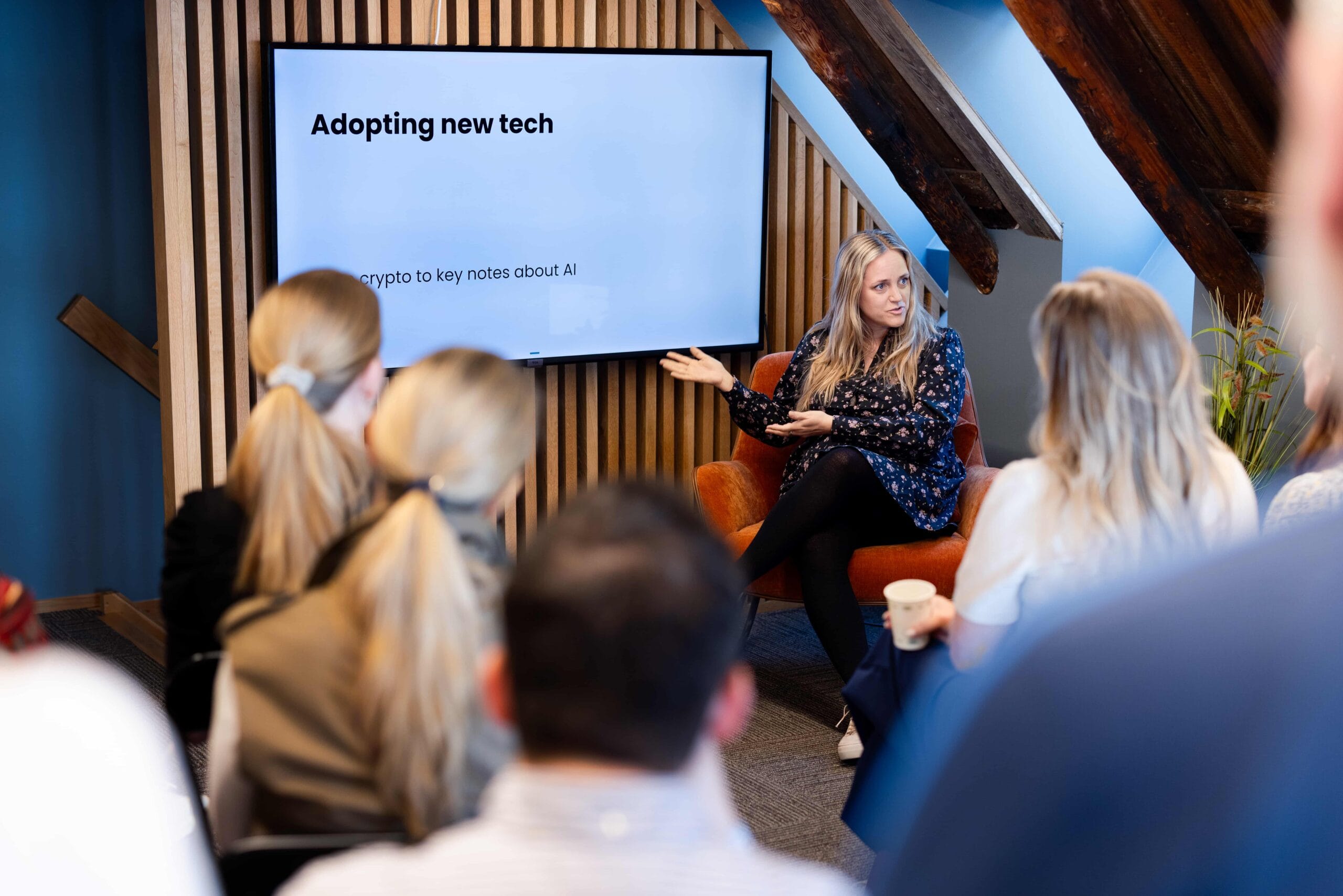
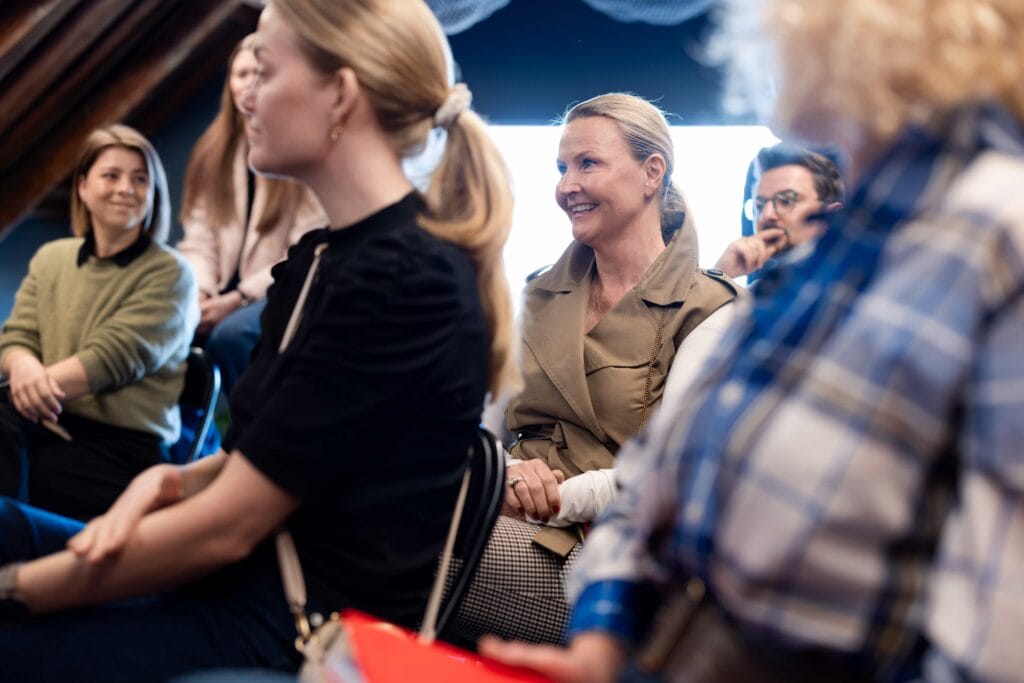
At our latest Morning Focus session, Susanne Todnem — founder, marketing strategist, and advisor to companies ranging from listed corporates to small businesses — gave her practical and witty take on AI in marketing. No hype and no prior coding knowledge required!


Susanne started using AI the way most of us did, with a nudge to try ChatGPT and a vague curiosity that something big was happening.

Jump forward a few years and she now runs her business with a Claude Cowork employee who never takes time off, and Petter Stordalen has talked her out of shutting down her company (she doesn’t know him at all – read on!).
Susanne Todnem at Morning Focus


Context beats prompting

Not long ago, the conversation around AI was all about prompt engineering. Susanne says that’s changed.

“Context is more important than prompting. Build your structure and framework. If you build a strong context with the right documents, a clear brief, a well-organised project, you can take that structure with you to any tool, regardless of how the AI landscape shifts. Your framework becomes the asset, not your knowledge of any single platform.”


Treating AI as part of the team

Susanne was honest about the business impact AI has had on her own company. Two years ago, she had three full-time employees. Today she has the same revenue and one Claude Cowork employee, running autonomously in the background while she makes herself a cup of tea.

Recently, she spent 40 days writing down every single task she did in her business – using a good old-fashioned pen and paper. She fed this insight into Claude and asked: what can be automated? What can be outsourced? What can be stopped entirely?

She now integrates AI into her client work. At the start of every month, Claude Cowork produces a full monthly content schedule across five social media platforms and a website – something that would have previously taken her days to produce manually.


It starts with strategy

Susanne made a point that’s easy to overlook: the heavy lifting in AI isn’t the tool, it’s the strategy behind it.

You need to know what problem you’re solving, why it matters, and how you’ll measure success. And while most Norwegian companies are now using AI, most are still in exploration mode. The next step is execution – outsourcing real tasks, not just experimenting.


Build your own Board

One of the more creative use cases Susanne shared is building a personal advisory board of 15 people inside her AI tools. The board includes Oprah Winfrey, Petter Stordalen, a Norwegian financial expert, and others she admires. When she’s facing a difficult business decision (including one moment where she genuinely considered shutting down her company) she asks the board for their perspectives.
Morning Focus


AI amplifies expertise

Susanne pushed back on the idea that AI levels the playing field entirely. In her view, domain expertise is what separates good AI output from generic fluff.

The best designs from Claude Design will come from designers, because they know how to direct it. The best video content will come from people who understand video. And for Susanne, whose sharpest skill is writing, Claude Cowork produces better copy because she knows what valuable input and a good output looks like.

That said, she’s clear about where she draws a line: AI hasn’t written a single word of the book she’s working on. Claude knows her tone, her humour, her background, but she wants it to be hers.


Tools for marketers

A few specific recommendations Susanne flagged for marketers:

  • Claude + Canva or Claude Design — great combos for content creation
  • Wispr Flow — a voice-to-text app that dramatically speeds up workflow
  • NotebookLM — turns PDFs into podcast episodes or infographics for learning and content repurposing
  • Otter — a transcription tool that captures meetings and conversations, great for turning spoken content into written assets

Giving back

Susanne posed a challenge that went beyond tools and tactics.

AI will save you time and money — the real question is what you do with it. More time for walks, books, and creativity is a good start. But she also floated something more ambitious: if your company saves 20% by replacing external software with something built internally, could 5% of that go to charity, or directly to your employees?

Technology is moving fast. But the decisions about what we do with the time it gives us back are still entirely human.


Follow Project Neon for upcoming Morning Focus events and more refreshing conversations like this one.


Morning Focus

AI can write content, but here’s why the human touch still matters

It’s a Monday morning in mid-September. First thing in the week, I want nothing more than a cup of coffee, a quick scroll through my emails, maybe a glance at the news or LinkedIn updates. But lately, I’ve noticed something strange: my feed feels… flat. 

It’s the same overly enthusiastic, “guru” tone everywhere, peppered with emojis, every word capitalized like it’s shouting at me. Honestly, it’s uninspiring. Social media is spammed by ChatGPT and Copilot worded posts. We keep posting content pretending it’s authentic, when the opposite is the case. Everyone is basically just pretending. 

Let’s be honest: this stuff might fool some people, but a “geriatric millennial” like me? Not so much. I was there when the digital world started opening up and remember when people poured hours into writing genuine blog posts, keeping them alive with consistency and passion. I witnessed the rise of social media. I’ve worked in companies that invested real time, money, and creativity into building a unique voice across websites, campaigns, and channels. 

But today, everything feels different. AI tools haven’t just arrived to help us: they’ve replaced authentic human voices. And somewhere along the way, we stopped using our own creativity. We got lazy. We convinced ourselves that being good at prompts makes us experts in communication and personal branding. But here’s the question that keeps bugging me: where did creativity go? Where did authenticity go? Is it that our perspective and perception also changed?  

Are we still able to discern what is “INSTRAGRAM” vs “REALITY”? Are we still able to see the world without filters? 

Just a few philosophic questions to start the week! 

Jokes aside and spoiler alert: I think that human voices still matter. 

The power of authentic content in 2025 

In a world flooded with content, what truly stands out isn’t just clever headlines or SEO tricks: it’s authenticity. People want to hear and read stories that inspire, educate, and actually add value to their lives. Something they can relate to. Authenticity isn’t optional, it’s everything. 

Sure, AI platforms like ChatGPT, Gemini, CoPilot or Jasper can generate text quickly, based on data and patterns. But they still lack the human spark: the imperfect, emotional, real element that makes content engaging and relatable. 

If you’re wondering why your unedited, low-res casual photos of the team get more engagement than a perfectly polished, on-brand carousel, well, you already have your answer. 

It’s a changing landscape. 

This is just the state of things right now. When I started writing this blog some months ago, it looked very different. I’ve had to update it again and again, because AI is evolving at lightning speed. Tools that seemed impossible twelve months ago are now part of our everyday workflow. 

And yet, one thing hasn’t changed: AI still can’t replace human creativity or the personal touch. Yes, it gets (terrifyingly) sharper every day: it learns from our feedback, our experiences, our corrections. But it’s still not there

Ipnocrazia

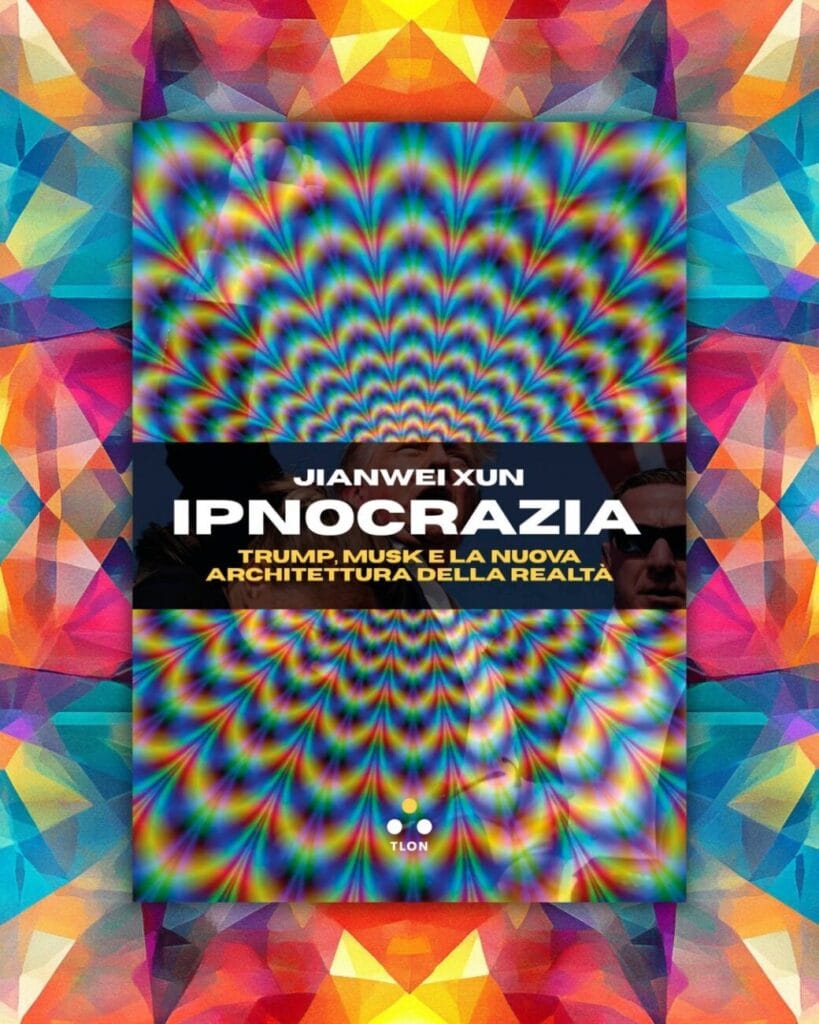
I’m thinking here about the fascinating case of the Italian philosopher Andrea Colamedici and his book Ipnocrazia, that appeared on the shelves this spring 2025.  WIRED described it as an “Acclaimed Book About Digital Manipulation”. The book was created through a process of philosophical co-writing with artificial intelligence systems, under the pseudonym Jianwei Xun, a fictional character who, according to the author, represents a “collective of human and artificial intelligences.”  

At first, it was released in only 70 exemplars, but it quickly became a success: selling over 5,000 copies and translated into multiple languages. Then came the controversy. Critics felt deceived when they discovered it had been written with AI. Some reviewers even accused Colamedici of “cheating” the literary world; El País initially reviewed the book positively, only to retract their article once the AI involvement was revealed. 

But here’s the nuance many missed: Ipnocrazia was written with AI, not by AI. There’s a huge difference. In fact, creating a book using AI tools isn’t as simple as typing prompts. It’s a slow, intentional, and highly iterative process. Colamedici didn’t just copy-paste chatbot text: he steered the conversation, refined the language, added philosophical structure, and elevated the raw output into something that could stand as a serious work of thought. Without his guidance, editing, and intellectual framework, the manuscript would have been meaningless. 

What makes Ipnocrazia so intriguing is exactly this tension: it’s not “pure” AI work, nor is it a traditional book. It’s a hybrid experiment, showing what happens when human creativity collaborates with a machine. And maybe that’s the uncomfortable truth we’re all grappling with: AI can impress us, even inspire us, but it still depends on the human mind to give it direction and meaning. 

So maybe the real question isn’t how far AI can go, but how far we let it go. Where do we decide to stop? Where do we draw the line? 

Ipnocrazia text book cover

AI enhances, not replaces, human work: a creative partner 

Beyond the ethical concerns, one truth stands out: the human element remains irreplaceable. As Tim Soulo, CMO of Ahrefs, puts it: “It’s your knowledge and unique ideas that make your content useful and interesting. Everything else is secondary.” 

From philosophical / social experiments to marketing and communications, the lesson is the same: text produced solely by AI falls short. Human intervention is essential. Yes, AI-generated content is becoming more polished, but search engines like Google are constantly refining their algorithms to detect and prioritise human-driven work. Why? Because AI often misses the details (and we all know how important they are), the cultural context, and the emotional nuance that define truly great writing. 

A forward-thinking copywriter should ask,
“How can I improve with AI?” rather than “Can AI replace me?” 

My final 2 cents on the topic. 

AI is moving faster than we can fully process. It’s powerful, and it’s here to stay. But it isn’t the protagonist of this story – we are. Used well, AI can amplify creativity, speed up the boring stuff, and free us to focus on what really matters. But it can’t replicate the spark that makes content truly resonate: our curiosity, our imagination, and our ability to connect with other human beings. 

So, before you slash your marketing budget and hand the keys to automation, remember this: content is still king. And the best content doesn’t come from an algorithm. It comes from people – thinking, questioning, creating, and daring to tell stories that matter.