Connect
Connect
Connect
Connect

SEO in 2026: why ranking on Google is no longer enough

For almost two decades, SEO followed a relatively simple logic:

Rank higher. Get clicks. Generate traffic.

That model is now changing faster than most companies realize. In 2026, users increasingly interact with AI-generated answers before they ever reach a website. They ask ChatGPT for recommendations. They read Google AI Overviews instead of scrolling through ten blue links. They compare suppliers through Perplexity summaries. They rely on conversational interfaces to filter information for them.

Search is becoming an answer layer. And that changes what visibility means. Today, a company can influence a buying decision without generating a single click. That’s why the conversation around SEO has expanded into something new: AEO, Answer Engine Optimization.

While this may seem like an extension of buzzwords, the key point is: this is not the death of SEO – it’s the evolution of visibility. The brands that will win in the next few years are not the ones chasing algorithms. They are the ones becoming trusted sources inside AI-generated conversations

From Search Engines to Answer Engines

Traditional search worked like a directory. Users searched. Google displayed pages. Users clicked.

AI-powered search behaves differently. Today, platforms increasingly blend information instead of simply listing it. The user experience now looks more like this:

Question → AI selects sources to inform the response AI-generated answer → user given source references

This shift is already visible across platforms such as Google AI Overviews, ChatGPT browsing experiences, Perplexity AI, Microsoft Copilot and voice assistants. In many cases, users receive enough information directly in the interface that they don’t need to visit any websites. That phenomenon is often referred to as “zero-click search.”

But zero-click does not mean zero influence. It simply means visibility happens earlier.

People searching on Google

What Is AEO, really?

Answer Engine Optimization (AEO) is the practice of optimizing content so AI systems can:

  • understand it
  • extract it
  • trust it
  • summarize it
  • cite it
  • recommend it

Traditional SEO focused on ranking pages. AEO focuses on becoming part of the answer itself. That distinction matters. Because AI systems do not evaluate content exactly like search engines did.

They prioritize:

  • clarity
  • semantic relevance
  • structure
  • topical authority
  • consistency across sources
  • trustworthiness

In other words:

The internet is shifting from a “ranking economy” to a “reference economy.” In many ways, this mirrors what happened with LinkedIn’s Brew 360 update. Content visibility is becoming less dependent on isolated keywords and more dependent on semantic relevance, topical consistency, and perceived authority within a subject area.
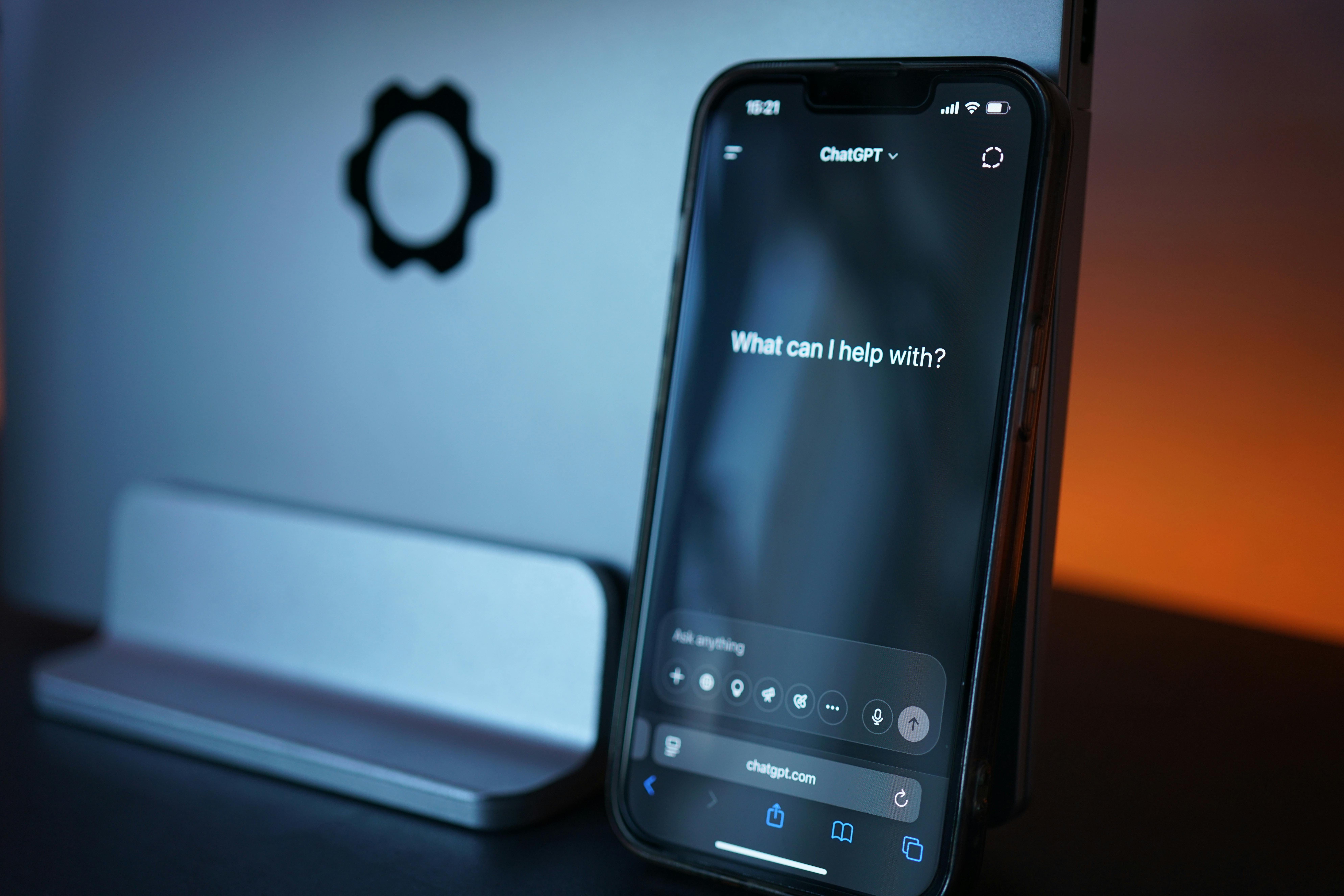
Chat GPT dashboard

Why visibility and search behaviour are changing in B2B

For years, traffic was the default way to measure SEO success. More clicks meant more visibility. In 2026, that relationship is becoming far less direct, especially in B2B.

Decision-makers increasingly use AI systems during supplier research, market comparisons, strategic planning, and technical evaluations. Instead of searching isolated keywords, they ask conversational questions and rely on AI-generated summaries to filter information before exploring further.

That means a company may influence a buying decision long before a website visit ever happens.

A user might discover your framework inside an AI summary, reference your explanation internally, or shortlist your solution based on how your expertise was surfaced across search and answer engines, even without appearing in traditional analytics.

This is why traffic alone is no longer the core metric to measure visibility.

A successful outcome has transitioned from:
“Did they click?”

To:
“Did we shape the conversation before the click happened?”

Because in modern search, influence increasingly starts earlier in the decision journey and often outside the website itself.

The new reality: SEO and AEO are not opposites

One of the biggest misconceptions right now is that AEO replaces SEO. It doesn’t. Strong AEO still depends on strong SEO foundations.

Without:

  • crawlable content
  • technical health
  • topical authority
  • internal linking
  • site structure
  • credible brand signals

AI systems have nothing reliable to reference. SEO remains the infrastructure. AEO becomes the visibility layer built on top of it. The companies performing best today are the ones who are combining both.

At Project Neon, we believe core content principles still apply. But they have now taken on extended meanings in this context:

1. Visibility: Your content is discoverable in traditional search (ranking).

2. Credibility: Your ideas surface inside AI summaries, snippets, and assistant responses.

3.Authority: Your explanation becomes the version people remember and repeat.

Traditional SEO focused heavily on the first layer. The best strategy for companies today, is to try and own all three.

Why original thinking matters more than ever now

One of the most important shifts in 2026 is this: generic content is becoming invisible. AI systems are already saturated with recycled articles saying the same thing. If everyone publishes identical “Top 10 SEO Tips” content, AI has no reason to prioritize one source over another.

Original thinking is becoming the real differentiator. As AI-generated content floods the internet with repetitive information, visibility increasingly shifts toward sources offering genuine perspective, through unique frameworks, expert insights, first-hand experience, and real-world case studies.

In practice, this means companies need fewer low-value articles and more high-quality knowledge assets.

people digital strategy meeting at Project Neon office

How SEO strategy needs to change in 2026

The biggest shift happening in SEO is not only technical, it’s behavioural. Users are no longer searching only through keywords. They are asking more complex, conversational questions and increasingly relying on AI systems to filter, summarize, and interpret information for them. That means modern optimization is becoming less about matching exact search terms and more about understanding intent, context, and decision stages.

The best-performing content today is the content that genuinely helps users understand something, not just find something.

At the same time, AI-powered search systems are changing how content gets evaluated. Structure, clarity, and topical depth matter more than ever. Content that is easy to interpret, summarize, and reference is significantly more likely to surface across AI-generated responses.

This is also why isolated blog posts are becoming less effective. Search engines and answer engines increasingly reward brands that demonstrate consistent expertise across an entire topic ecosystem. Authority is now cumulative: depth, consistency, and connected knowledge matter more than publishing volume alone.

And perhaps most importantly, the rise of AI generated content is making generic content increasingly invisible and low in value. Today, a unique perspective and memorable thinking becomes one of the strongest visibility advantages a brand can have.

What you can stop worrying about

One thing worth clarifying: not everything being discussed online about AEO is actually necessary.

In a guide published on 15 May 2026, Google Search Central was explicit on this. You don’t need to create llms.txt files or special AI markup. You don’t need to “chunk” your content into fragments for AI to process it better. And you don’t need to rewrite your content specifically for AI systems, they’re built to understand context and meaning, not just exact keywords.

The fundamentals haven’t changed. What has changed is the bar for quality. You can read Google’s full guidance here.

Visibility is becoming harder to measure and to understand

One of the biggest challenges with AI-driven search is that visibility increasingly happens outside traditional analytics.

A company may influence a buying decision long before a user ever visits the website. As AI systems become more involved in research and comparison processes, the customer journey becomes less linear and far less measurable through traffic alone.

That is why traditional SEO reporting is no longer enough on its own.

Modern visibility strategies need to look beyond clicks and begin considering broader signals of influence: branded search growth, topic ownership, presence across AI-generated answers, assisted conversions, and overall authority within a category. Because the real impact of AEO goes beyond technology, it reflects a broader shift in how people discover and evaluate information.

That’s why people are increasingly outsourcing research, filtering, and interpretation to AI systems. Search engines used to help users find information. Answer engines increasingly help users understand it. As a result, brands are no longer competing only for attention. They are competing for trust. And trust is built through clarity, consistency, expertise, and original thinking.

Final thoughts: SEO is not disappearing. But its role is evolving.

Ultimately in 2026, visibility is no longer just about ranking first on Google. It is about becoming part of the answers shaping decisions across AI-driven platforms. The companies that adapt fastest will not necessarily be the ones producing the most content, but the ones creating the most useful, structured, trustworthy, and referenceable knowledge.

Because in the era of AI-generated search, the goal is no longer simply to be found. It is to become the source others rely on to understand the topic in the first place.
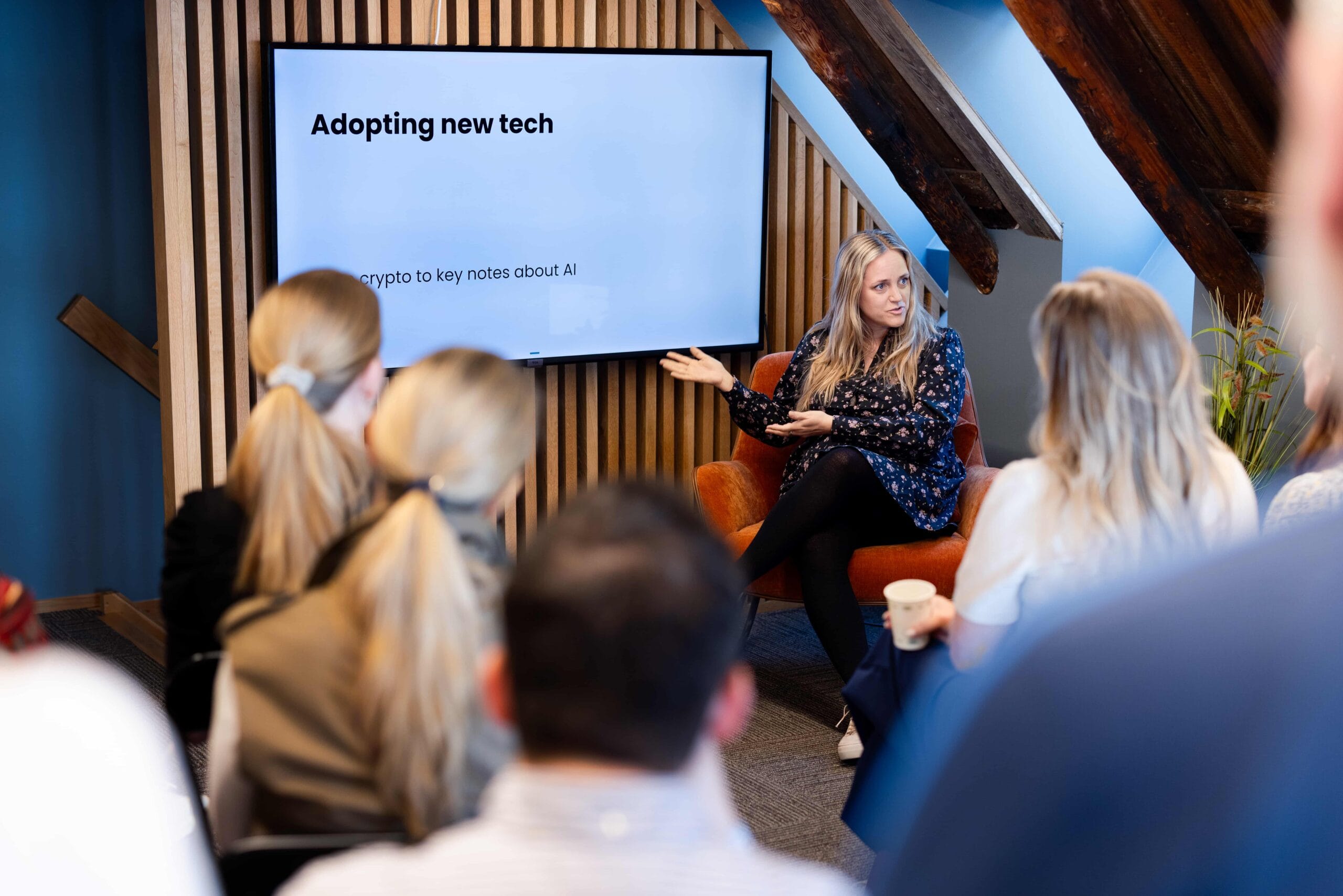
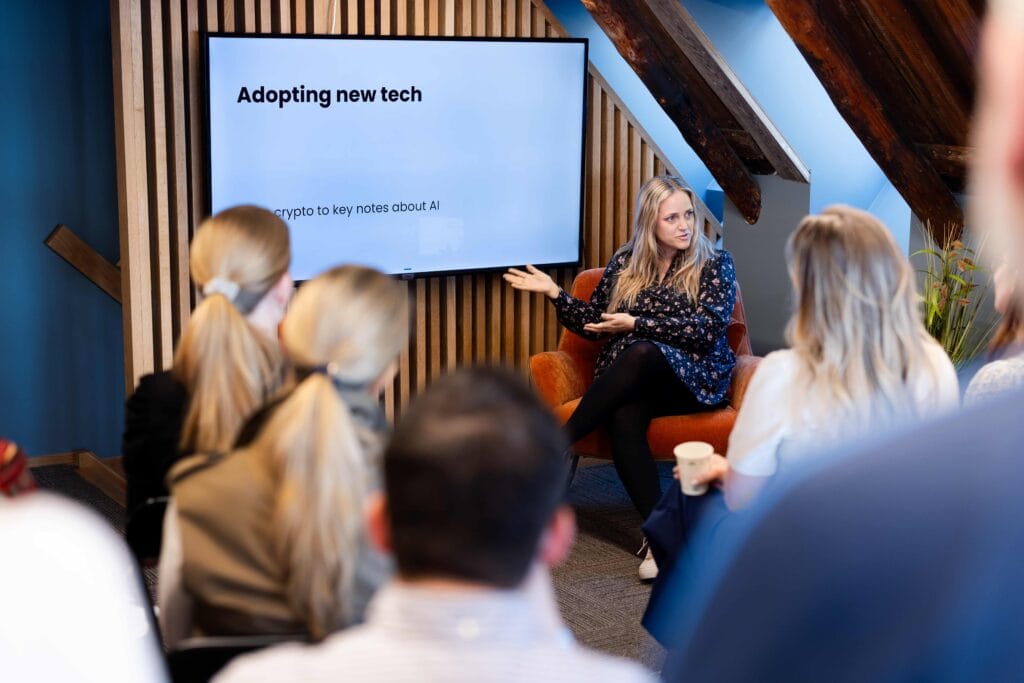
From ChatGPT Curious to Building Her Own AI Universe

At our latest Morning Focus session, Susanne Todnem — founder, marketing strategist, and advisor to companies ranging from listed corporates to small businesses — gave her practical and witty take on AI in marketing. No hype and no prior coding knowledge required!


Susanne started using AI the way most of us did, with a nudge to try ChatGPT and a vague curiosity that something big was happening.

Jump forward a few years and she now runs her business with a Claude Cowork employee who never takes time off, and Petter Stordalen has talked her out of shutting down her company (she doesn’t know him at all – read on!).

Susanne Todnem at Morning Focus


Context beats prompting

Not long ago, the conversation around AI was all about prompt engineering. Susanne says that’s changed.

“Context is more important than prompting. Build your structure and framework. If you build a strong context with the right documents, a clear brief, a well-organised project, you can take that structure with you to any tool, regardless of how the AI landscape shifts. Your framework becomes the asset, not your knowledge of any single platform.”


Treating AI as part of the team

Susanne was honest about the business impact AI has had on her own company. Two years ago, she had three full-time employees. Today she has the same revenue and one Claude Cowork employee, running autonomously in the background while she makes herself a cup of tea.

Recently, she spent 40 days writing down every single task she did in her business – using a good old-fashioned pen and paper. She fed this insight into Claude and asked: what can be automated? What can be outsourced? What can be stopped entirely?

She now integrates AI into her client work. At the start of every month, Claude Cowork produces a full monthly content schedule across five social media platforms and a website – something that would have previously taken her days to produce manually.


It starts with strategy

Susanne made a point that’s easy to overlook: the heavy lifting in AI isn’t the tool, it’s the strategy behind it.

You need to know what problem you’re solving, why it matters, and how you’ll measure success. And while most Norwegian companies are now using AI, most are still in exploration mode. The next step is execution – outsourcing real tasks, not just experimenting.


Build your own Board

One of the more creative use cases Susanne shared is building a personal advisory board of 15 people inside her AI tools. The board includes Oprah Winfrey, Petter Stordalen, a Norwegian financial expert, and others she admires. When she’s facing a difficult business decision (including one moment where she genuinely considered shutting down her company) she asks the board for their perspectives.

Morning Focus


AI amplifies expertise

Susanne pushed back on the idea that AI levels the playing field entirely. In her view, domain expertise is what separates good AI output from generic fluff.

The best designs from Claude Design will come from designers, because they know how to direct it. The best video content will come from people who understand video. And for Susanne, whose sharpest skill is writing, Claude Cowork produces better copy because she knows what valuable input and a good output looks like.

That said, she’s clear about where she draws a line: AI hasn’t written a single word of the book she’s working on. Claude knows her tone, her humour, her background, but she wants it to be hers.


Tools for marketers

A few specific recommendations Susanne flagged for marketers:

  • Claude + Canva or Claude Design — great combos for content creation
  • Wispr Flow — a voice-to-text app that dramatically speeds up workflow
  • NotebookLM — turns PDFs into podcast episodes or infographics for learning and content repurposing
  • Otter — a transcription tool that captures meetings and conversations, great for turning spoken content into written assets

Giving back

Susanne posed a challenge that went beyond tools and tactics.

AI will save you time and money — the real question is what you do with it. More time for walks, books, and creativity is a good start. But she also floated something more ambitious: if your company saves 20% by replacing external software with something built internally, could 5% of that go to charity, or directly to your employees?

Technology is moving fast. But the decisions about what we do with the time it gives us back are still entirely human.


Follow Project Neon for upcoming Morning Focus events and more refreshing conversations like this one.

Morning Focus

How to turn one piece of content into a powerful multi-channel campaign

Content, content, content… do you need more? Or do you need to make what you have work harder?

With AI Overviews now appearing on nearly half of all search queries and platforms like ChatGPT, Perplexity, and Google AI Mode reshaping how people discover information, a single piece of content has more distribution potential than ever before.

There’s no doubt that great content is still a foundation for growing your online audience. But creating it is only half the challenge – the real opportunity lies in what happens next.

Let’s say you’ve produced a case study to showcase a particular product or area of expertise. You publish it on your website and share a link across your social channels. Job done?

Not quite.

Here are our tips and ideas for turning that one asset into a multi-channel content campaign – built for how audiences actually search, scroll, and discover in 2026.

Books in the shelf at Project Neon

Why repurposing content matters more than ever in 2026

Content marketing still delivers exceptional ROI – generating three times more leads than outbound marketing at significantly lower cost. But the landscape has shifted.

Audiences are no longer finding content in one place. Discovery now happens across Google, LinkedIn, YouTube, AI chat interfaces, short-form video platforms, and email. To maximise reach, your content needs to show up in multiple formats, across multiple surfaces and be structured in a way that both humans and AI systems can understand.

This is where a smart repurposing strategy comes into play.

8 ways to repurpose one case study into multiple assets

1. Create an infographic for social and AI citation

Extract the most compelling statistics, outcomes, and insights from your case study and turn them into a shareable infographic. Numbers and facts make for highly shareable social content, and they’re also the kind of specific, structured information that AI search tools are more likely to cite when answering user queries.

2026 AIO tip: Use clear, factual language with defined figures (e.g. “reduced onboarding time by 40%”) rather than vague claims. AI systems are trained to surface precise, authoritative answers. Proprietary data and original research are now a measurable differentiator – content with specific stats earns more citations and backlinks.

2. Amplify social proof

If your case study includes a quote or testimonial from a satisfied client, give it the spotlight it deserves. A well-designed graphic featuring the quote, the person’s name, job title, and headshot builds immediate credibility.

For even greater impact, arrange a short 30-second video clip of the client speaking directly to camera. Authentic user-generated and customer-generated content is increasingly favoured by both social algorithms and AI search systems, which are becoming more attuned to real-world reputation signals.

LinkedIn tip: Tag the individual and their company in your post and encourage them to like, comment, and share. Algorithm engagement signals remain powerful and the visibility boost from a well-connected mention can be significant.

3. Produce a short-form video or animation

Technical case studies describing a process, solution, or service often translate extremely well into video. A 30–60 second explainer or animation doesn’t need to cover everything – focusing on one clear outcome or insight is often more effective than trying to summarise it all.

YouTube is now the second-largest search engine after Google and an increasingly important source of AI citations. Publishing video content there (with keyword-optimised titles, descriptions, and tags) extends your reach and increases your chances of appearing in both traditional search results and AI-generated answers.

Format tip for LinkedIn: Square video with subtitles continues to outperform other formats. With the majority of social video consumed on mobile with sound off, subtitles are no longer optional.

4. Build a presentation deck

Distil your case study into a concise slide deck. Include five to eight slides covering the challenge, approach, results, and key takeaway. This gives you a polished, ready-to-use asset for client pitches, industry events, and internal presentations.

LinkedIn distribution tip: Save your deck as a PDF and share it as a LinkedIn document post. The platform’s algorithm has consistently given strong organic reach to PDF carousel posts, making this one of the highest-engagement formats available without paid spend.

5. Optimise for AI search and answer engines (AIO/GEO)

You content strategy now has to consider AI.

AI Overviews, ChatGPT Search, Perplexity, and Google’s AI Mode are now answering questions directly – pulling from sources they deem authoritative, well-structured, and clearly written. To ensure your case study content is cited and surfaced by these systems:

  • Add an FAQ section to the case study page on your website. Question-and-answer formatting is one of the most consistently cited structures in AI search outputs.
  • Use schema markup (FAQPage, Article, Organisation) so AI crawlers can easily interpret your content’s purpose and context.
  • Write for intent, not just keywords. Think about the specific questions your audience is asking AI tools and make sure your content answers them clearly and directly.
  • Build brand authority. AI models increasingly rely on entity recognition and reputation signals. The more your brand is referenced, linked to, and discussed across reputable sources, the more likely it is to appear in AI-generated answers.
6. Pitch to trade and industry publications

Could your case study form the basis of a feature article, thought leadership piece, or contributed post in an industry publication? Media coverage extends your reach to a new audience and, importantly, generates high-quality backlinks that strengthen your domain authority.

External citations on reputable sites don’t just improve traditional SEO rankings – they also signal to AI systems that your brand is a trusted source worth referencing.

7. Activate your email database

Email marketing remains one of the highest-ROI content distribution channels available but it is often underused for longer-form content like case studies.

Send the case study to your email database with a brief, benefit-led introduction. If you have a particularly high value piece of content then consider updating your email signature to include a banner linking to the piece. Every email sent is a low-effort distribution touchpoint that costs nothing and keeps being pushed out – you never know when it might spark someone’s interest.

8. Use assets to power paid social campaigns

Your infographic, client testimonial graphic, video, and animation can all be repurposed as paid advertising creative on LinkedIn, Meta, and other platforms. Paid distribution amplifies your organic efforts and allows you to reach precisely defined audiences.

LinkedIn in particular offers granular B2B targeting options. Even modest budgets can generate meaningful reach when paired with compelling, high-quality creative. However, it’s important to note that one off campaigns rarely get the results you want. A 3 month + campaign strategy is a far more valuable approach.

Joe working at Project Neon

The 2026 content mindset: Create once, distribute everywhere

In a world drowning in content, the most effective content strategies are not about publishing more, they are about quality content, distributed with intent.

By repurposing one piece of content across multiple formats and channels, you:

  • Maximise the return on your content investment
  • Reach audiences across different platforms and discovery behaviours
  • Increase your visibility in both traditional search and AI-generated answers
  • Extend the lifespan of a single asset across monthly and annual content plans

The businesses gaining ground right now are those building content that is clear, structured and authoritative. Focus on quality and distribution.

Create great content – and make it work harder.